
Categories: France How To, Health & Safety
What happened on October 17
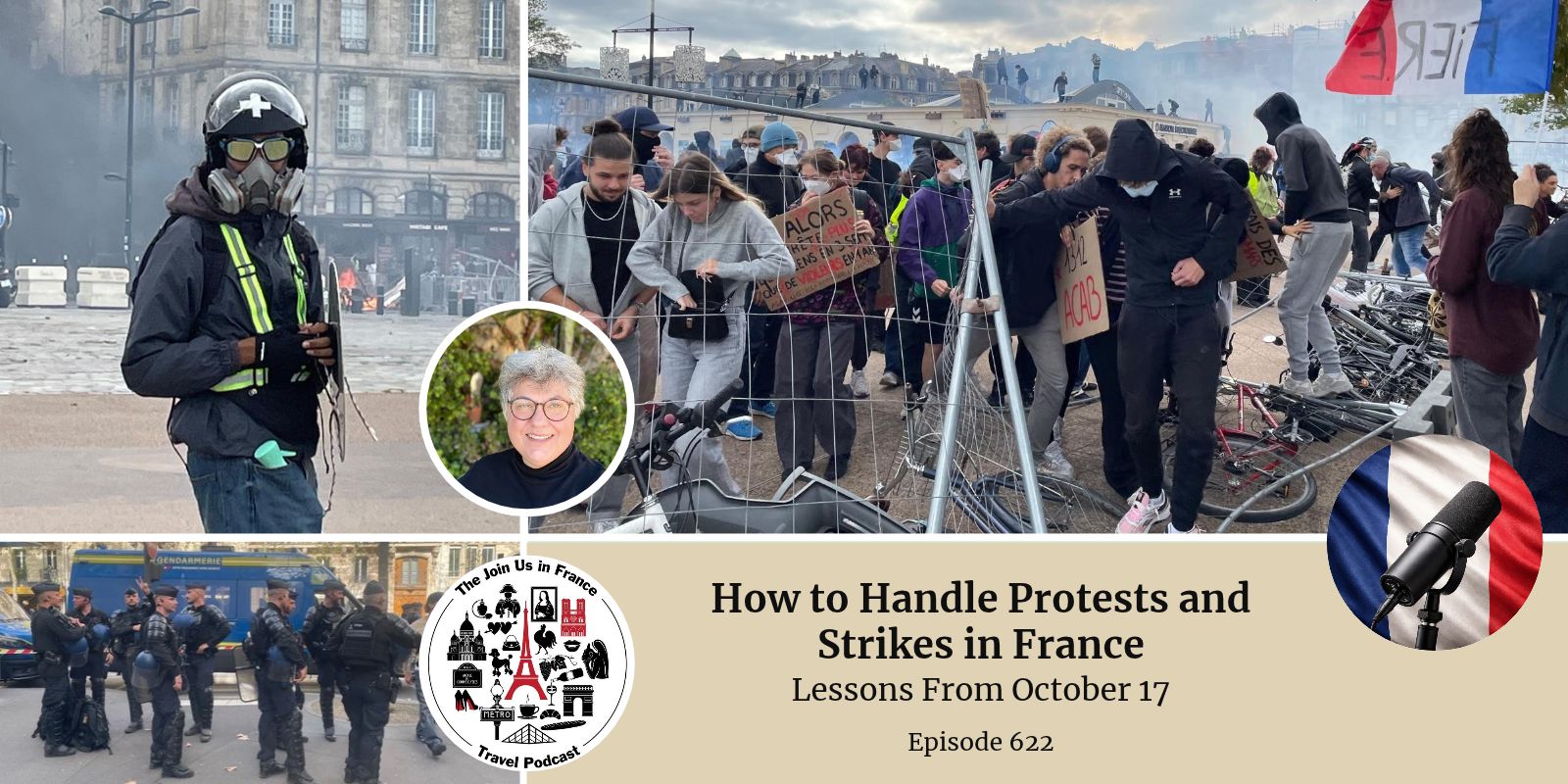
On Saturday, October 17, demonstrations in several French cities got out of hand. They were much bigger than anyone expected, the police were spread thin, and in some places the night ended with fires and looting. For episode 622, I talked to six listeners who were in France that week. Each of them was in a different place and had a different experience, and between them they give a pretty complete picture of how to handle protests in France if you’re visiting.
Listen to this episode ad-free
Bordeaux: tear gas around the Place de la Bourse
Patricia Howard, from Portland, Oregon, was staying in a B&B a few blocks from the Place de la Bourse. That morning there was no sign of trouble: no police, no protesters, and her host had checked and been told the march was going somewhere else. Then they turned a corner on the way to their boat tour and walked straight into chaos.
She got tear-gassed three times. Bordeaux’s old center has narrow, winding streets, so you can’t see what’s coming. At one point she and her husband pressed themselves against a building while a line of riot police ran past. Later she asked an officer in French if they could get through, and he let them pass. That night, looters stood under their window showing off what they’d taken. The next morning, Rue Sainte-Catherine was a mess, and people were already out cleaning it up.
Paris: it depended which bank you were on
Lachlan Cook spent the day at the Mouffetard market as usual. He walked past peaceful students, saw a march go down his street in the 4th, and watched it from his window. Patricia Perry, who lives in the 15th, says nothing happened on the Left Bank at all. The trouble was on the Right Bank, at Place de la République, Châtelet-Les Halles, and along Rue de Rivoli. By Sunday morning the Bastille market was running as normal.
Limoges: watching the city hall burn
Anne-Marie and Tom Blank came to Limoges after visiting Oradour-sur-Glane. They had heard from other bootcampers on WhatsApp that things were getting serious, so they spent part of the afternoon in their hotel. They were at mass when the lights in the church went out. They walked back on side streets, and from their sixth-floor room they watched the Mairie de Limoges burn. That wasn’t a protest that got out of hand. It was arson, and someone has been arrested.
Montpellier and Provence
Janet Boyd, who is studying in Montpellier, watched the march from a café near the Place de la Comédie. For two hours it was families, strollers, handmade signs, even a marching band. Then she smelled tear gas, and she went home. The shops that got hit afterward were North Face, Doc Martens, Foot Locker, and jewelry stores. Helena Fedorec, from England, saw three demonstrations in the weeks before: a tense one in Aix-en-Provence, a cheerful student march in Arles, and the aftermath of one in Marseille.
How to handle protests in France: what my guests recommend
Everyone I talked to agreed on the basics. Here’s what they’d tell you:
Find out where demonstrations start in your city. Demonstrations have to be declared to the préfecture, and each city has its usual starting points and routes. Look them up before you book, and don’t stay right on them. In Paris, that means not staying at Place de la République.
Ask your host or the front desk where it’s safe to walk that day.
Watch for police vans and barriers. Patricia Perry says if police are standing around waiting, something is going to happen there.
Check the metro. Stations close as the day goes on. The Bonjour RATP and IDF Mobilités apps show which stops are closed.
If you get caught in tear gas, cover your face with any cloth you have, close your eyes, breathe shallowly, and get against a wall. Don’t run with the crowd, and don’t run toward the police.
Put your phone away. Patty says this is not the time to take pictures.
Stay off the main squares after dark. Janet says the people still there later in the evening were not the ones she’d seen marching in the afternoon.
Should you still come to France?
All six of them said yes, and so do I. The damage was in a few hyper city centers, and it didn’t last long. Most of the country saw nothing. I spent that evening at a concert in a small village and only heard about it when we walked out. The following Saturday was much calmer. But I expect more demonstrations most Saturdays until the presidential election in April 2027, so knowing how to handle protests in France is worth a few minutes of planning. Walk two streets over and you’re usually fine.
Get the newsletter
If you’d like to hear about new episodes and what I’m working on, sign up for my newsletter at joinusinfrance.com/newsletter. It’s the best way to stay in touch.
Table of Contents for this Episode
More episodes about life in France
#JoinUsInFrance, #FrancePodcast, #TravelPodcast, #Francophile, #FranceTravelTips, #FranceTravel, #RealFrance, #ParisTravel, #VisitFrance, #TravelSafety, #FranceProtests, #ParisProtests, #Manifestation, #Bordeaux, #Limoges, #Montpellier, #Paris, #TravelAdvice, #SlowTravel, #FrenchCulture
FOLLOW US ON:
Subscribe to the Podcast
Apple YouTube Spotify RSSSupport the Show
Tip Your Guides Extras Patreon Audio Tours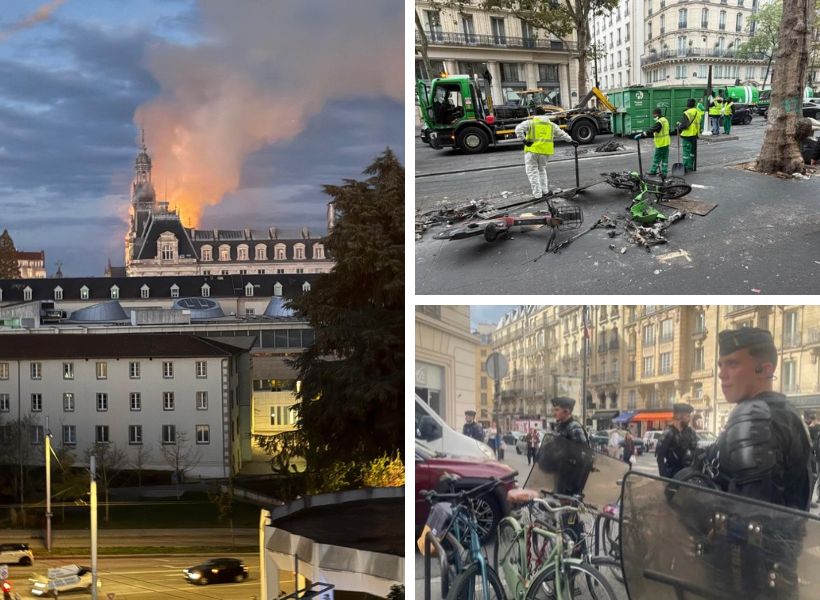
Read more about this episode
TranscriptCategories: France How To, Health & Safety