Category: Paris
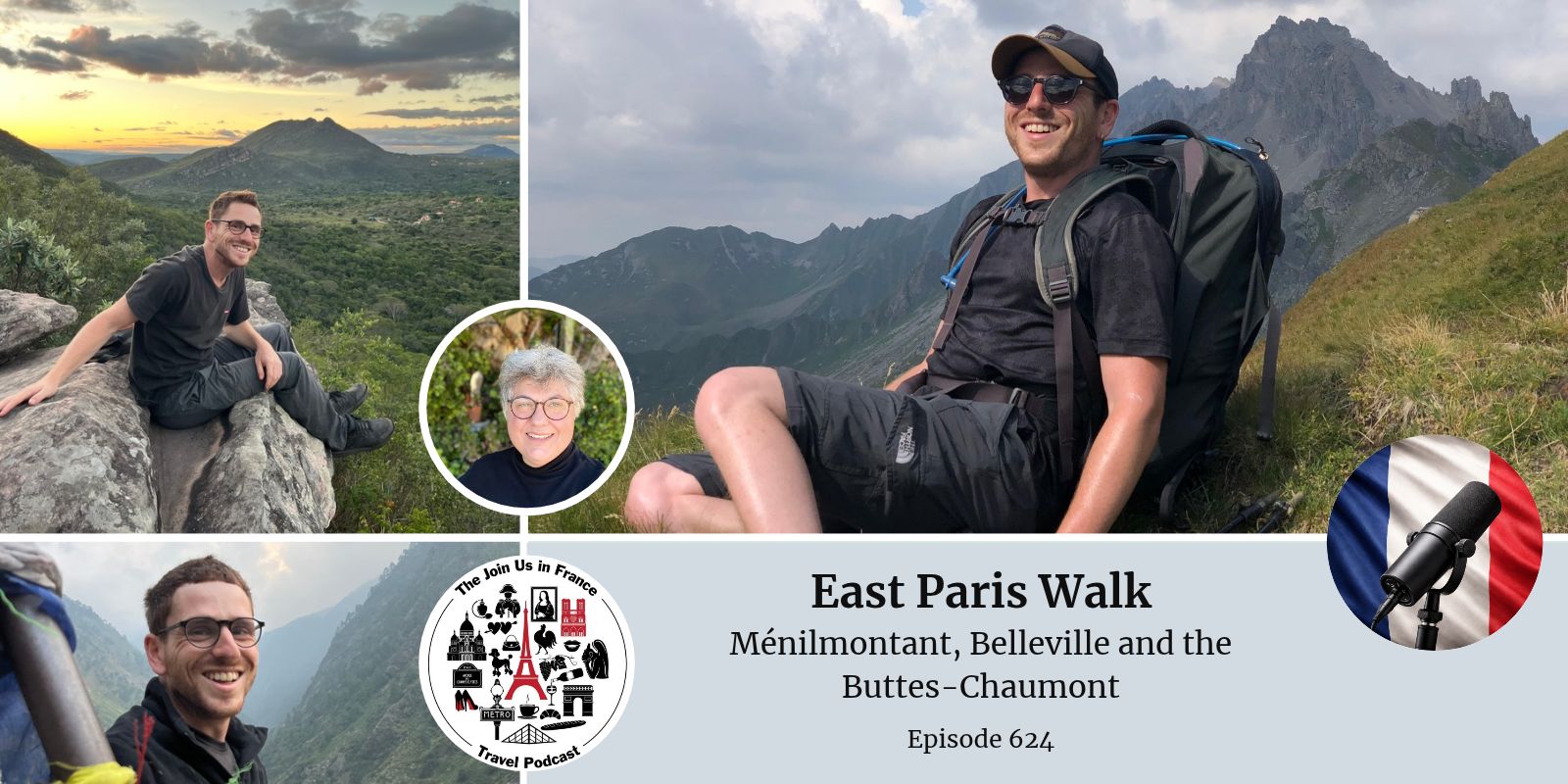
Most visitors to Paris never go further east than Père Lachaise Cemetery. In episode 624, I talk with Yann Darmon, a French teacher who lived in the 20th arrondissement for several years. He walks us through the part of Paris where locals go and tourists rarely do. If you’ve already seen the big sights and want to know what everyday Paris looks like, this East Paris walk is a good place to start.
Where to Start Your East Paris Walk
Take Line 3 to Gambetta. From there you can step into the top corner of Père Lachaise. The east side of Paris sits on a hill, so you look west across the whole city, with the Eiffel Tower in the distance.
From Gambetta, walk north about 10 to 12 minutes into Ménilmontant.
La Bellevilloise and the Village Streets
La Bellevilloise, on Rue Boyer, was once a workers’ co-op. Today it’s a cultural venue with concerts most days, and it recently opened a rooftop bar. You get a view of the Paris skyline without the crowds.
Between Ménilmontant and Belleville, take the small streets. You’ll find actual two- and three-story houses, which is unusual in Paris. It’s calm and it feels like a village. Rue des Cascades is known for its murals, and street art is everywhere in this area.
Parc de Belleville: Trocadéro Without the Tourists
At the top of Belleville, Parc de Belleville has a belvedere, a viewpoint where an alley lines your eye up with the Eiffel Tower. Yann says Ménilmontant is about 128 meters high, close to Montmartre. On summer weekends, locals bring picnics and music. Yann calls it a Trocadéro with no tourists.
Accordions, Crêpes and Neighborhood Bistros
Yann’s favorite stop is Le Vieux Belleville, a restaurant musette. On certain days, check their website for which ones, you eat while an accordion player leads a sing-along. They hand out the lyrics, and people get up and dance. It’s traditional, and it’s a lot of fun.
For crêpes, Yann likes Rond, on the same street as the park. It serves buckwheat galettes and good cider at reasonable prices, and it has a terrace in summer. You don’t need to go to Montparnasse for a good crêpe. Que du Bon is a quiet French bistro in Belleville, and Aux Folies de Belleville, by the Belleville metro, is a café-bar where Édith Piaf and Maurice Chevalier once performed. Piaf grew up in Belleville, and there’s a plaque on Rue de Belleville.
Belleville’s Chinatown, and Is It Safe?
Paris has two Chinatowns. The first grew up in the 13th arrondissement in the 1970s and 80s, when refugees from Southeast Asia moved into the Olympiades towers. Belleville’s Chinatown came later, in the 80s and 90s, when people moved there for work and cheaper rents. Belleville already had North African, Middle Eastern and Jewish communities, and today you’ll find African, Armenian, kosher, Vietnamese and Chinese shops side by side.
I asked Yann directly about safety. During the day, it’s fine. At night, be a little careful, especially as a woman. There are lots of bars, so the streets stay busy, and young women do walk alone. Use common sense: if you see trouble, walk away.
If you want lively bars and a creative crowd, come here. If you want calm and polished, stay in the 5th or 6th.
The Buttes-Chaumont and Beyond
Keep walking north to the Buttes-Chaumont, Yann’s favorite park in Paris. It’s a man-made park from the 19th century, with a lake, follies, a grotto and a Rosa Bonheur café. Go on a warm Saturday afternoon, not a Monday morning in winter. The Canal Saint-Martin is about a 20-minute walk from there.
This part of Paris isn’t known for museums. It’s known for small theaters, cultural centers like the Théâtre de l’Ermitage, thrift shops and good restaurants. Yann also recommends the City of Paris’s Paris Je T’aime website, which has turn-by-turn walking itineraries for these neighborhoods.
Terroo: Meeting Locals for Free
Yann runs Terroo, a free platform that connects travelers with locals. They aren’t guides, just people who want to show you their neighborhood, share a picnic or do a language exchange over a café noisette. No money changes hands. The name comes from terroir, the idea that where you grow up shapes who you are.
In the Magazine Segment
I cover why the Paris City Council is letting Louis Vuitton pay €2 million to redo two streets next to its future Champs-Élysées flagship, and why councilors from both left and right objected. I also tell the backstory of the Gare du Nord, Europe’s busiest train station: Rothschild’s railway, the 23 statues on the façade, and how the line helped invent the Parisian day trip.
A Note on the History
In the episode, Yann says Belleville and Ménilmontant became part of Paris at the end of the 1800s. In fact, they were annexed in 1860, when Paris expanded to its present 20 arrondissements.
Get the Newsletter
Want more from behind the scenes? The newsletter is short, comes out with each episode, and it’s where I share what doesn’t make it into the show. Sign up at joinusinfrance.com/newsletter.
More episodes about visiting Paris
#JoinUsInFrance, #FrancePodcast, #FranceTravelTips, #Francophile, #RealFrance, #EastParis, #ParisOffTheBeatenPath, #Belleville, #Menilmontant, #ButtesChaumont, #PereLachaise, #ParisStreetArt, #ParisNeighborhoods, #ParisLikeALocal, #HiddenParis, #ParisWalks, #BalMusette, #GareDuNord, #ParisTravel, #TravelPodcast
FOLLOW US ON:
Subscribe to the Podcast
Apple YouTube Spotify RSSSupport the Show
Tip Your Guides Extras Patreon Audio Tours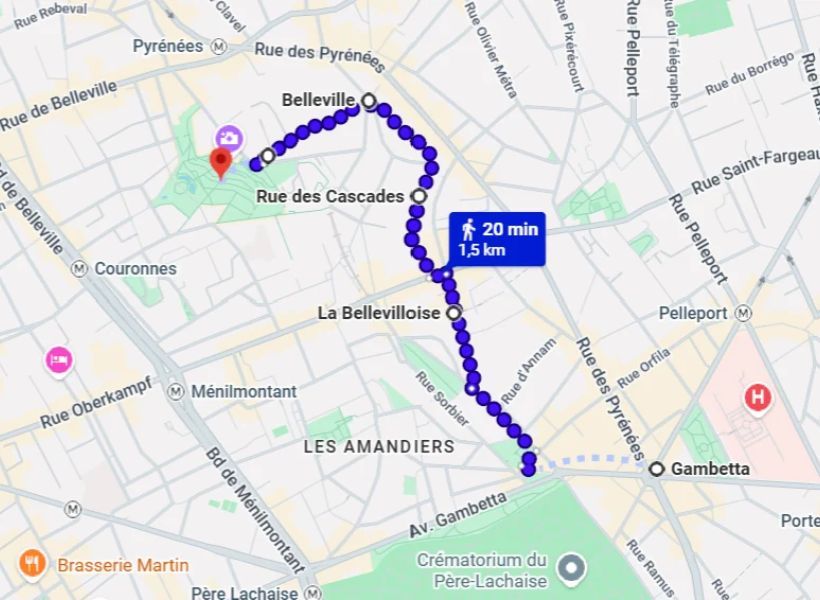
Read more about this episode
TranscriptCategory: Paris