

Category: French History
This episode features our frequent and very popular guest Elyse Rivin. If you enjoy her episodes, please consider supporting her on Patreon.
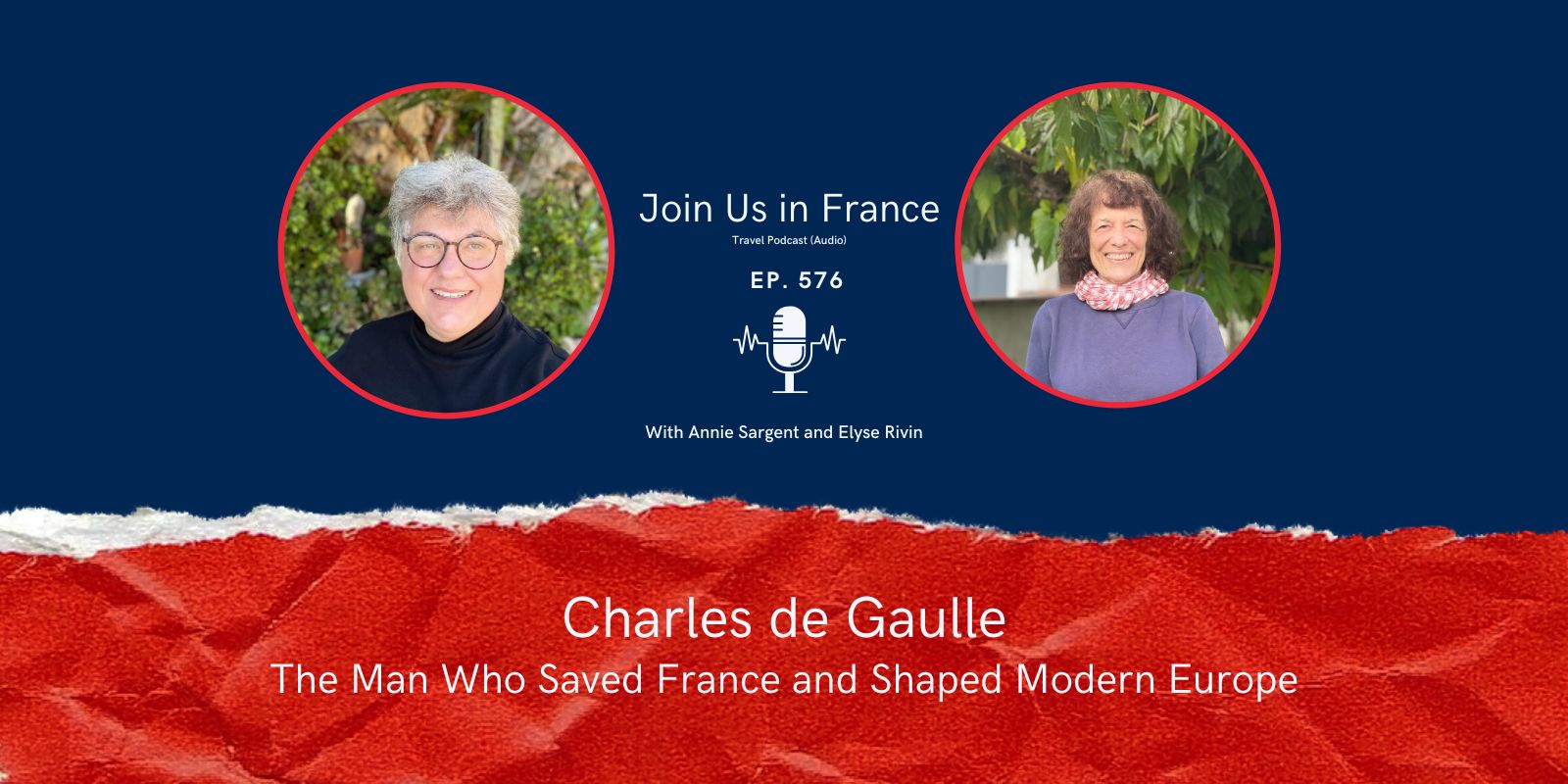
If you think of France in the 20th century, one name towers above the rest: Charles de Gaulle. Love him or hate him, he shaped modern France like no other. In this episode of Join Us in France, host Annie Sargent and Elyse Rivin of Toulouse Guided Walks dive deep into the Charles de Gaulle biography—his military genius, his stubborn will, and his complicated legacy. This isn’t just a history lesson. It’s the story of a man who believed France was destined for greatness—and made sure the world remembered it.
Listen to this episode ad-free
From Lille to Legend: The Early Years of Charles de Gaulle
Charles de Gaulle was born in 1890 in Lille, into a family that was noble but not wealthy. His father, a history teacher, filled his head with stories of France’s past glories. His mother, deeply Catholic, instilled in him a sense of duty and faith. Young Charles grew up believing France was special. And he decided early on that he would be the one to restore its grandeur.
He entered the prestigious Saint-Cyr Military Academy in 1909—France’s answer to West Point. By 1912, he graduated, ready to serve. World War I tested him immediately. Wounded three times, captured by the Germans, and held as a POW for two and a half years, de Gaulle never stopped fighting. He even tried to escape five times. His fellow officers called him stubborn. His enemies called him reckless. But de Gaulle? He called it patriotism.
While imprisoned, he didn’t waste time. He wrote essays on military strategy, arguing that France needed armored divisions to win future wars. Nobody listened—yet. But de Gaulle wasn’t the type to back down. His ideas would later change how wars were fought.
World War II: The General Who Said "No" to Defeat
When France fell to Nazi Germany in 1940, most leaders accepted defeat. Not de Gaulle. From London, he took to the radio and declared, "France has lost a battle, but France has not lost the war." His broadcasts became a lifeline for the French Resistance. He clashed with Winston Churchill and Franklin Roosevelt, who found him difficult (Roosevelt hated him, actually). But de Gaulle didn’t care. He was fighting for France—not for allies’ approval.
He formed the Free French Forces, rallying soldiers and civilians alike. When the Allies liberated Paris in 1944, de Gaulle made sure French troops led the parade. The message was clear: France was free, and it was his France.
After the war, he didn’t just rebuild the country. He rewrote its rules. As president from 1959 to 1969, he created the Fifth Republic, a system still in place today. He pulled France out of NATO’s military command. He gave Algeria independence—angering many, including Annie’s own family, who lived there as Pieds-Noirs. De Gaulle was a man of contradictions: a conservative who worked with communists, a military man who became a politician, a leader who quit the moment the people turned against him.
The Personal Side: Family, Faith, and a Daughter’s Legacy
De Gaulle’s personal life was just as fascinating. He married Yvonne in 1921, a match arranged by his mother. Theirs was a true partnership. Yvonne stood by him through exile, war, and political storms. Their daughter, Anne, had Down syndrome and died at just 20. De Gaulle adored her. After her death, Yvonne devoted herself to charity, founding the Anne de Gaulle Foundation for disabled children.
Elyse Rivin points out that de Gaulle’s height—nearly 6’6”—made him impossible to miss. But it was his voice that defined him. Whether rallying troops or addressing the nation, he spoke with authority. His famous line, "The end of hope is the beginning of death," captures his unshakable belief in France’s future.
Where to Walk in De Gaulle’s Footsteps
Want to explore de Gaulle’s France? Start in Lille, his birthplace. Visit Saint-Cyr, the military academy that shaped him. And if you’re near Colombey-les-Deux-Églises, stop by his home, La Boisserie, where he retired (and where he’s buried). It’s a quiet place, far from the political storms he once commanded.
Why This Episode Matters
This isn’t just a Charles de Gaulle biography. It’s a story about resilience. De Gaulle refused to accept defeat—whether from the Germans, his allies, or his own people. Love his politics or not, his life teaches us that leadership isn’t about popularity. It’s about conviction.
Annie read A Certain Idea of France by Julian Jackson. It's a serious book and a bit of a slog, but well-worth it for people who are interested in history.
So, have you been to any of these places? Did you know about de Gaulle’s radio broadcasts during WWII? Or his feud with Roosevelt? Share your thoughts—and your own French history stories—in the comments!
Listen and Subscribe
Ready to hear the full story? Listen to Episode 576 of Join Us in France on your favorite podcast app, Spotify, or YouTube. And if you love diving into France’s past and present, hit subscribe! We release new episodes every week, packed with history, travel tips, and the kind of stories you won’t find in guidebooks.
Because France isn’t just a place. It’s a story—and we’re exploring it together.
Table of Contents for this Episode
Table of Contents for this Episode
#JoinUsInFrance, #FrancePodcast, #TravelFrance, #FrenchCulture, #ExploreFrance, #DiscoverFrance, #FranceTravelTips, #RealFrance, #Francophile, #FranceAdventures, #CharlesDeGaulle, #FrenchHistory, #WWIIHistory, #ParisTravel, #VisitFrance, #FranceStories, #TravelThroughTime, #FrenchHeritage, #HistoryPodcast, #TravelInspiration, #NYEInParis
More episodes about French history
FOLLOW US ON:
Subscribe to the Podcast
Apple YouTube Spotify RSSSupport the Show
Tip Your Guides Extras Patreon Audio Tours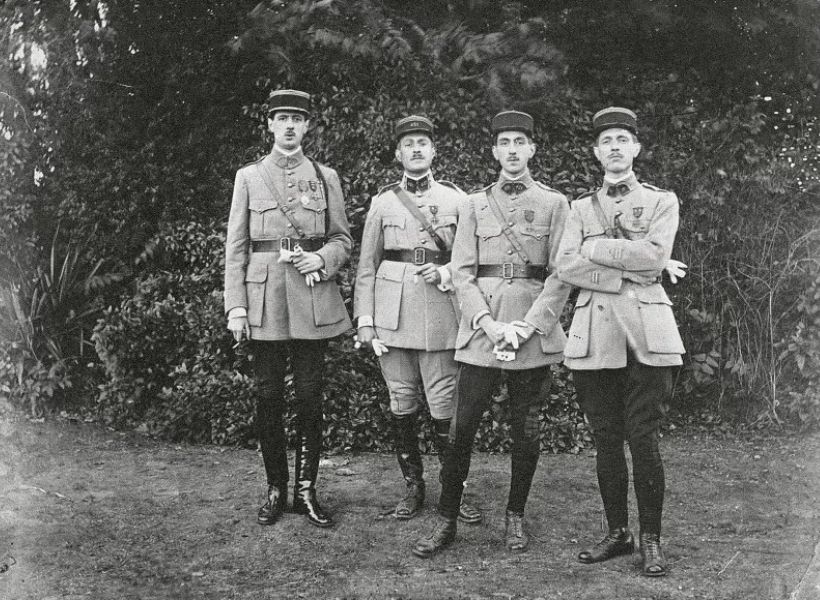
Read more about this episode
TranscriptCategory: French History