

Category: French History
This episode features our frequent and very popular guest Elyse Rivin. If you enjoy her episodes, please consider supporting her on Patreon.
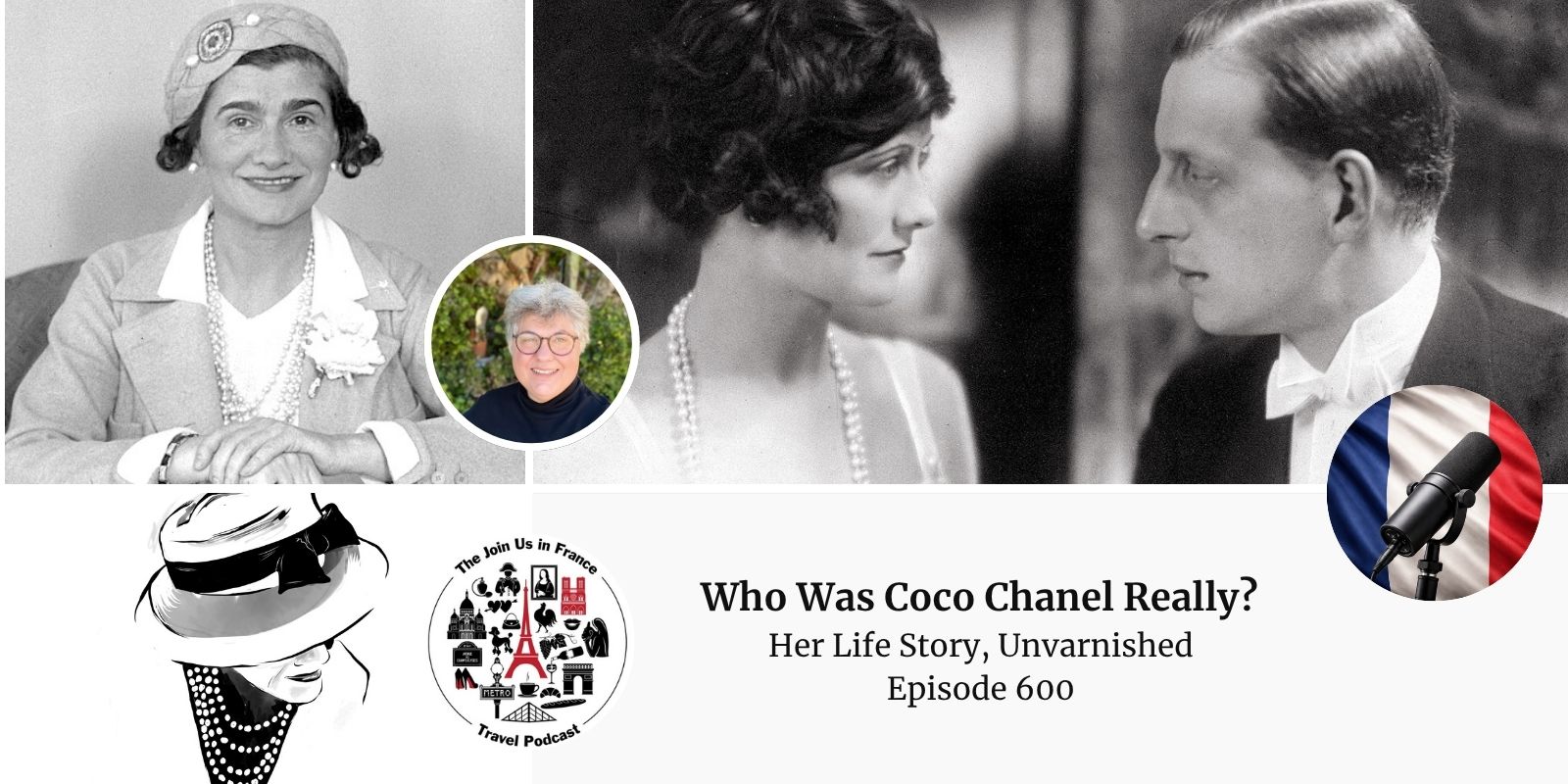
Most people know the name. Fewer know the actual story. In episode 600 of Join Us in France, Elyse Rivin and I sit down to trace Coco Chanel's real life story from beginning to end — and it is not the polished legend she spent decades carefully constructing.
Listen to the episode ad-free
She Wasn't Who She Said She Was
Gabrielle Chanel was born in 1883 in the Corrèze, in rural central France, to a family that was genuinely poor. Her mother died young, exhausted from poverty and too many children. Her father, unable to care for his daughters, sent Gabrielle and her sisters to live with an aunt — a seamstress — where she learned to sew. That much is true.
What she told people for years was different. She claimed she had been sent to a Cistercian convent, that cold stone walls and colorless surroundings shaped her aesthetic, that nuns taught her everything she knew. It made a better story. It wasn't true. A biography published decades after her death, based on documents that hadn't previously been available, confirmed that she invented large parts of her own origin story. The convent did exist in her life — briefly, as a young adult trying to avoid an arranged marriage — but it was not the formative institution she described.
This habit of mythmaking followed her throughout her life, which makes Coco Chanel's real life story both fascinating and slippery to pin down.
From Hats to Empire
What is well documented is her talent and her ambition. She started designing hats in Moulins, where she also sang in a cabaret café and acquired the nickname Coco from soldiers who sang along with her every night. She had a series of wealthy, aristocratic lovers — she was clear-eyed about what those relationships were and unapologetic about using them to advance her position. One of them, an English baron nicknamed Boy Capel, funded her first shop at 31 Rue Cambon in Paris. She paid him back before the end of World War I.
By the 1920s she had three boutiques, several hundred workers, and a fashion philosophy built on one word: comfort. No corsets, shorter skirts, neutral colors, loose fabric. She designed the marinière — the classic French sailor top — as women's clothing. She invented the little black dress at a time when black was associated with mourning. And in 1921, she became the first fashion designer to license a perfume under her own name. Chanel No. 5 is still the world's best-selling perfume, 104 years later.
The Parts That Are Harder to Talk About
By the 1930s she had 4,000 workers, most of them women, who went on strike for decent wages. She never forgave them.
When World War II became inevitable, she shut her business entirely, fired everyone, and moved into a suite at the Ritz — which happened to be the headquarters of German intelligence. She took a German baron as her lover. She was recruited as an agent and given the code number 7124. She attempted to use Vichy laws to strip the Wertheimer family — the Jewish manufacturers who produced Chanel No. 5 — of their share of the profits. They had anticipated exactly that move and had already transferred ownership to a trusted non-Jewish associate before the laws came into effect.
She was arrested after the Liberation, tried as a collaborator, and released within days. Historians believe Churchill intervened to protect members of the British aristocracy whose Nazi sympathies would have been exposed in the proceedings. The documents confirming her role as a German agent were sealed for fifty years.
What to Make of Her
She lived until 1971, dying at 87 in her suite at the Ritz. She is buried in Lausanne, not France.
Elyse puts it well: Coco Chanel was genuinely ahead of her time in what she believed women could be and do. She also had ugly politics, treated her workers badly, and collaborated with an occupying force. Both things are true, and neither cancels the other out.
That tension is exactly why she's worth an episode — and why Coco Chanel's real life story is so much more interesting than the legend.
Listen to episode 600 of Join Us in France wherever you get your podcasts.
Want more France, delivered to your inbox? Sign up for the Join Us in France newsletter at joinusinfrance.com/newsletter.
Table of Contents for this Episode
More episodes about French history
#JoinUsInFrance, #FrancePodcast, #Francophile, #FranceTravelTips, #RealFrance, #CocoChanel, #ChanelHistory, #FrenchHistory, #FrenchFashionHistory, #FrenchWomenHistory, #ParisFashion, #ChanelNo5, #FashionHistory, #FranceHistory, #VisitFrance, #TravelFrance, #FrenchCulture, #HistoryPodcast, #WomenInHistory, #BiographyPodcast
FOLLOW US ON:
Subscribe to the Podcast
Apple YouTube Spotify RSSSupport the Show
Tip Your Guides Extras Patreon Audio Tours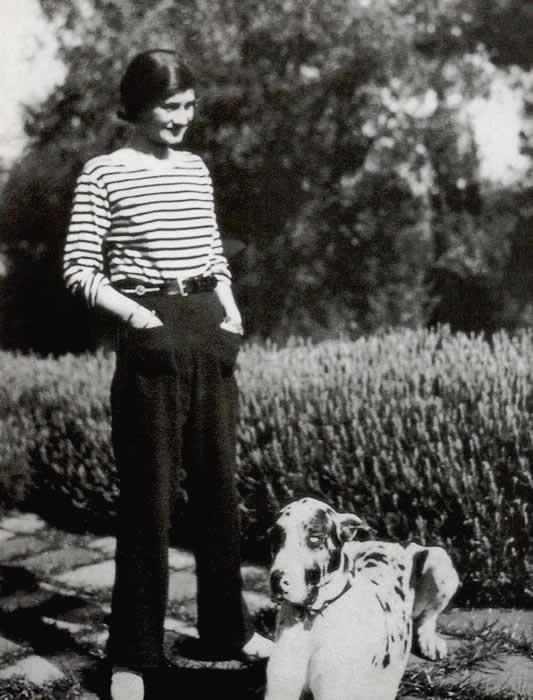
Read more about this episode
TranscriptCategory: French History