

Category: French History
This episode features our frequent and very popular guest Elyse Rivin. If you enjoy her episodes, please consider supporting her on Patreon.
Two Women, Two Remarkable Lives
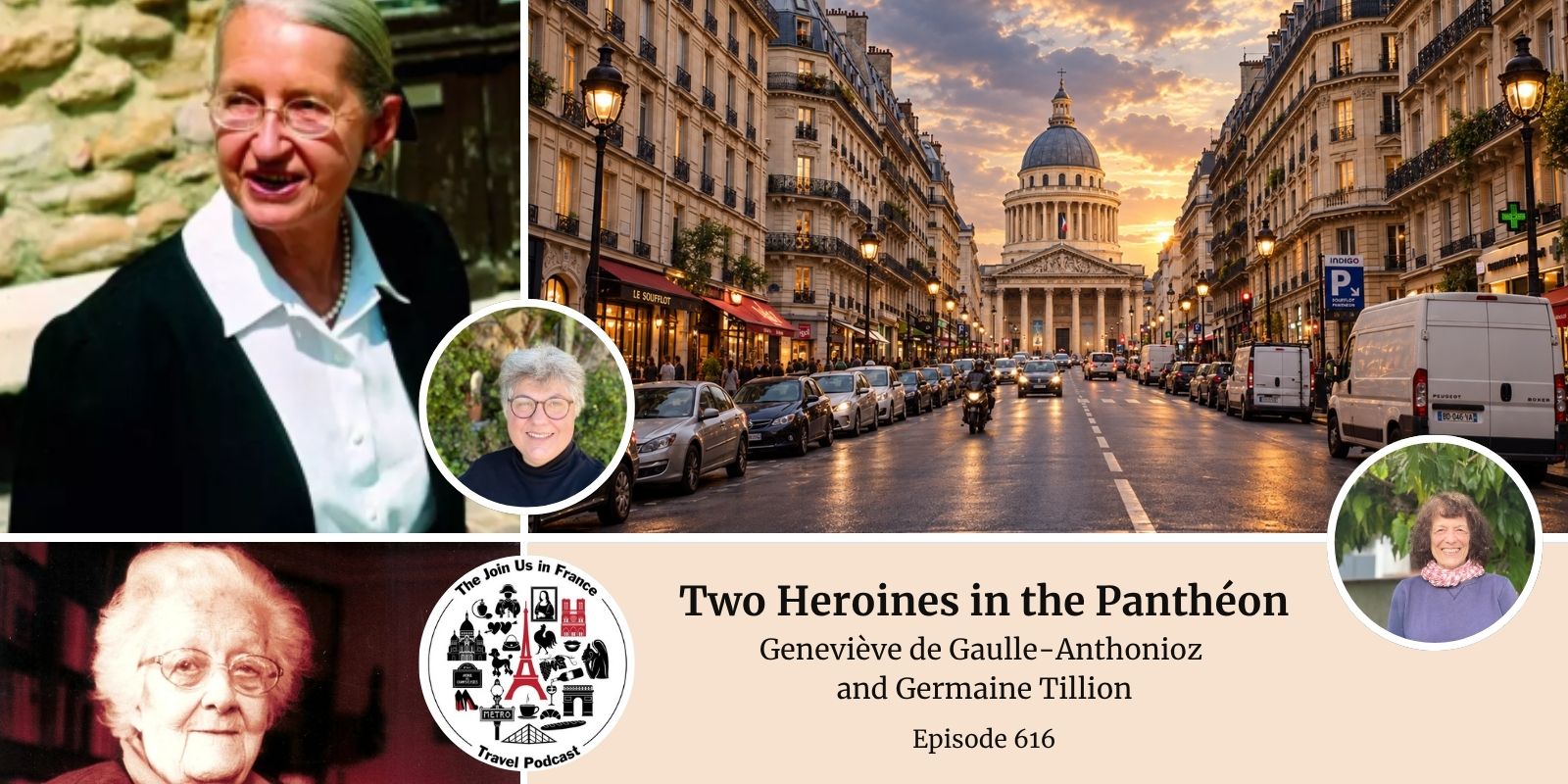
This week on the podcast, Elyse Rivin and I talk about two women in the Panthéon: Geneviève de Gaulle-Anthonioz and Germaine Tillion. It's not our usual light episode. Both women were arrested for Resistance activity during World War II, both survived deportation to the Ravensbrück concentration camp, and both spent the rest of their lives working against poverty, torture, and injustice.
Listen to this episode ad-free
We wanted to know why these two women in the Panthéon specifically, and what made their lives so remarkable. We're not historians, we're tour guides who got curious, so consider this an introduction, not a deep academic study.
Geneviève de Gaulle-Anthonioz: From the Resistance to Fighting Poverty
Geneviève de Gaulle-Anthonioz was the niece of Charles de Gaulle. Born in 1920, she grew up partly in the Saar region, where she became fluent in German and, as a teenager, read a copy of Mein Kampf that her father gave her — he wanted her to understand what was coming. By 1940 she was a university student in Paris, and she joined a resistance network that grew out of the Musée de l'Homme. She made and distributed the Croix de Lorraine, the symbol later associated with her uncle's Free French movement, and worked under a false name.
Book in English by Geneviève De Gaulle Anthonioz God Remained Outside: An Echo of Ravensbruck
She was arrested in 1943 and sent to Ravensbrück. Telling her captors who she really was — Charles de Gaulle's niece — is likely what kept her alive; the Germans saw her as a bargaining chip rather than someone to eliminate. She was released in April 1945 as part of a Red Cross-negotiated exchange.
After the war, Geneviève turned her attention to poverty. She joined ATD Quart Monde, an organization founded by a priest working in the slums north of Paris, and led it for 35 years. She argued that a family facing eviction should be guaranteed another place to live before being put out — a law that still hasn't passed in France. She also testified at the 1987 trial of Klaus Barbie, the "Butcher of Lyon." She died in 2002 at 81.
Germaine Tillion: Ethnologist, Resistance Fighter, Peacemaker
Germaine Tillion was 13 years older than Geneviève, born in 1907 to a magistrate father and an art-historian mother. She's considered a founder of modern ethnology, and before the war she spent years doing fieldwork with the Berbers in the Aurès Mountains of Algeria, learning their language before she even left France. Like Geneviève, she saw Nazism up close during a stay in Germany in the early 1930s and came home alarmed by what she'd witnessed.
When France fell in 1940, Germaine immediately joined a resistance group helping prisoners escape and became a liaison between separate networks. She was betrayed by a priest secretly working for the SS and arrested in 1943. She was deported to Ravensbrück in the "Nacht und Nebel" category reserved for the prisoners the Nazis considered most dangerous.
In the camp, she kept detailed notes, disguising the names of her torturers inside what looked like recipes, and she wrote an operetta mocking camp life that wasn't performed until 2007. She was released through Red Cross negotiations just before she was due to be sent to an extermination camp. After the war, she returned to Algeria and became an emissary during the War of Independence, helping negotiate for lives on both sides. She died in 2008, three weeks short of her 101st birthday.
A Friendship Forged in Ravensbrück
Geneviève and Germaine met in the camp and stayed close for the rest of their lives, corresponding for decades afterward; their letters were later published by Geneviève's daughter. Both devoted their post-war years to fighting what they'd witnessed firsthand — poverty, torture, dehumanization — even though they took very different paths to get there.
Why They're Both in the Panthéon
Neither woman's remains were moved to the Panthéon; their families wanted them to stay in the cemeteries where they were originally buried. Instead, soil from each grave was placed in an urn and installed there in 2015, alongside plaques honoring them. It's a fitting way to honor two women in the Panthéon who spent their lives thinking about other people rather than their own recognition.
Join the Conversation
If you want more stories like this one, along with a look at what I'm working on each week and a question to chew on, sign up for my free newsletter at joinusinfrance.com/newsletter.
Table of Contents for this Episode
More episodes about French history
#JoinUsInFrance, #FrancePodcast, #Francophile, #FranceTravelTips, #RealFrance, #FrenchResistance, #Pantheon, #WomenInHistory, #FrenchHistory, #WWIIHistory, #GermaineTillion, #GenevieveDeGaulle, #Ravensbruck, #ResistanceFighters, #AlgerianHistory, #LoireValley, #CalderExhibition, #ParisTravel, #FranceTravel, #ExploreFrance
FOLLOW US ON:
Subscribe to the Podcast
Apple YouTube Spotify RSSSupport the Show
Tip Your Guides Extras Patreon Audio Tours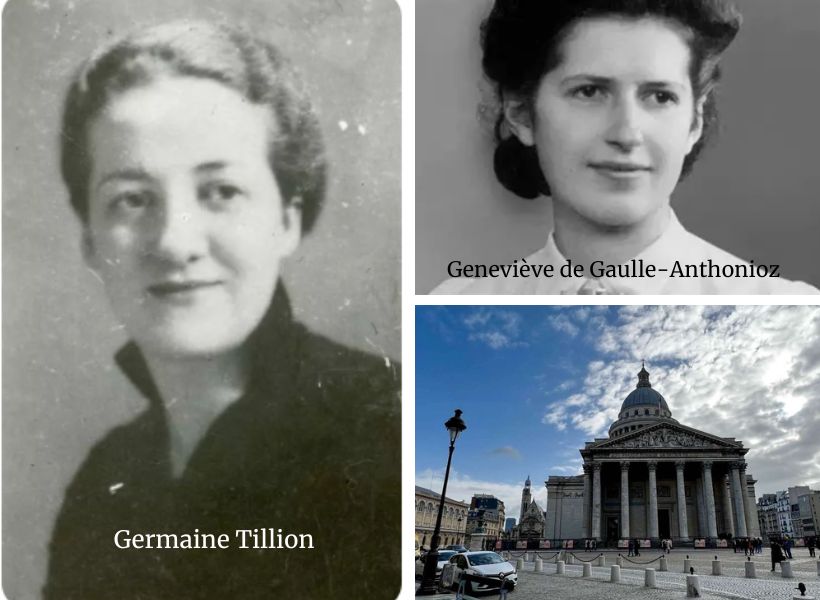
Read more about this episode
TranscriptCategory: French History