
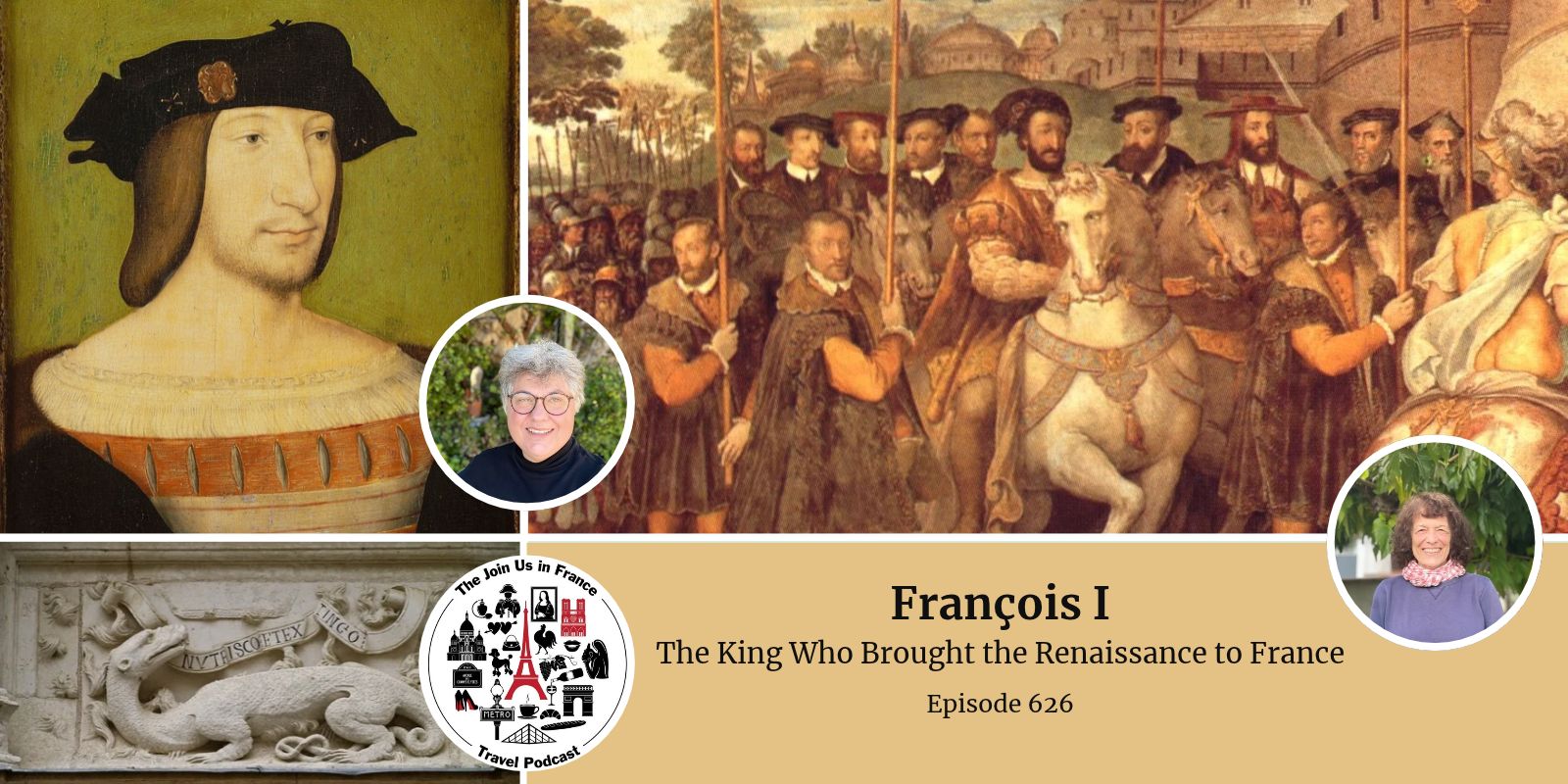
Elyse Rivin and I have done a lot of episodes about French kings, but François I (Francis I in most English-language books) is one of the most interesting. He is really two people. One brought the Renaissance to France. The other made decisions that are hard to defend, even by the standards of the 1500s.
Listen to this episode ad-free
Who Was François I?
François was born in 1494, at the very end of the Middle Ages. He wasn’t supposed to be king. Louis XII had no surviving sons, so the throne went to François, a distant cousin and the closest male heir. His mother, Louise of Savoy, was highly educated and influential, and she stayed a major force in his life until she died.
François had French and Italian tutors and grew up bilingual. One of his great-grandmothers was a Visconti, from the family that ruled Milan, so Italy was a second home for him from the start. He was also very tall for his time: about 1.98 m, or roughly 6'6".
He became king at 20 and married Louis XII’s daughter, Claude of Brittany, who was 15. She had seven children in nine years and died at 24. If you’ve ever eaten a Reine Claude plum, it’s named after her.
1515: Marignan and Leonardo
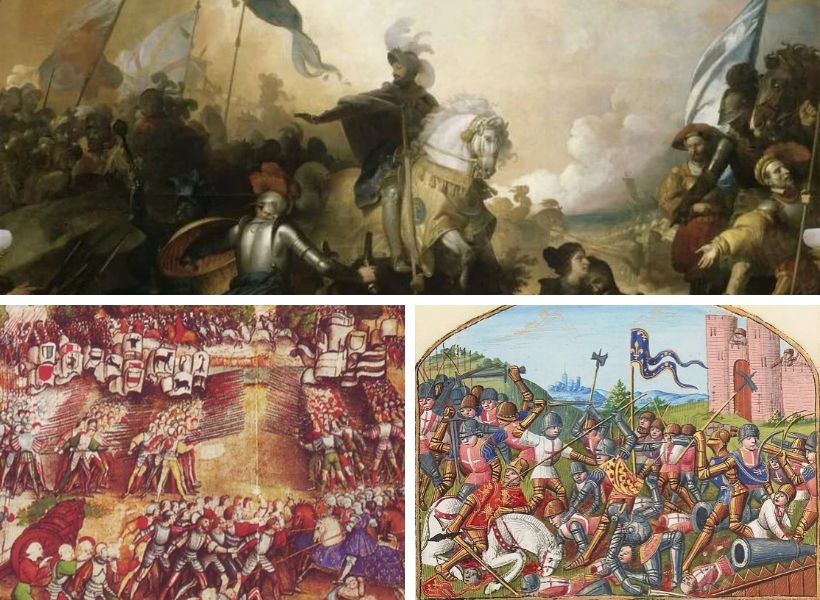
Ask a French person for one date in history and many will say 1515. Every French kid learns the rhyme: “Quinze cent quinze, c’est Marignan.” That year François crossed the Alps and won the battle of Marignano, about 16 km southeast of Milan, and with it the Duchy of Milan.
In Italy he saw Renaissance architecture and painting up close, and he met Leonardo da Vinci, who was already old by then. François invited him to France, called him “père,” and paid him a stipend equal to what his highest-ranking army officer earned. Leonardo came with the Mona Lisa and three other paintings in his luggage. He spent his last years near Amboise, and that is why the Mona Lisa hangs in the Louvre today.
The François I Renaissance in Stone
François loved painting and decoration, and he wanted France to look like what he had seen in Italy. Chambord began as a hunting lodge, and he turned it into a Renaissance showpiece; Leonardo is often linked to its early design. Fontainebleau became his main residence, filled with work by the Italian artists he brought over, including the sculptor Benvenuto Cellini.
He never liked the Louvre, which was still a medieval fortress. He called medieval architecture brutal, primitive and unsanitary, so he had the old tower torn down and started rebuilding. The work went on for generations. What we see today as beautiful old architecture was the latest fashion for him.
After he built Chambord, other noble families followed his lead and put up their own Renaissance châteaux along the Loire. The style spread to the provinces too. Elyse explains how it reached Toulouse.
Pavia, and the Sons He Left Behind
In 1525, at Pavia, François fought the forces of his rival, Charles Quint. His generals told him not to lead a cavalry charge in front of his own cannons, because the cannons couldn’t fire without hitting him. He did it anyway. The battle lasted four hours, most of his noblemen were killed, and he was taken prisoner.
He spent eleven months in Madrid. To get out, he signed a treaty giving up Burgundy and other territories, and he handed over his two sons, aged seven and eight, as hostages. Back in France, he didn’t honour the treaty. The boys spent about four years in harsh conditions, with no contact with their family. Louise of Savoy and Margaret of Austria finally negotiated their release in 1530 for two million gold coins. François also had to give up the territories after all and marry Charles Quint’s sister, Eleanor.
The younger boy later became Henri II. Elyse calls what François did hubris. On the episode I called him an idiot king, and I stand by it.
A King Who Made France More French
François also founded the Royal Library, supported printing, and created the Collège des trois langues, which became the Collège de France. He sent Jacques Cartier to explore Canada, and he signed a trade treaty with Suleiman the Magnificent, which scandalised the rest of Christian Europe.
His most lasting decision is the Edict of Villers-Cotterêts (1539). It has 192 articles, mostly about justice and administration. Article 111 requires legal proceedings to be in “langage maternel françois et nul autre.” Its target was Latin, which ordinary people couldn’t understand. It wasn’t aimed at Breton or Occitan. French didn’t become the official language in the Constitution until 1992. The edict also required parish priests to keep registers of baptisms and burials, and those registers are the direct ancestor of today’s état civil.
That’s what makes the François I Renaissance so interesting: a warrior king who also built a state that worked the same way for everyone.
Also in This Episode: Igor the retired guide dog for the blind
In the magazine segment, I tell you the story of Igor, the guide dog I raised as a puppy. He worked for nine years in Montpellier and came back to live with us when he retired. He turns 13 on November 25.
Get the Newsletter
If you like the podcast, you’ll like the newsletter too. It’s short, it comes out with each episode, and one of the next ones covers my week in Montpellier. Sign up at joinusinfrance.com/newsletter.
Table of Contents for this Episode
More episodes about French history
#JoinUsInFrance, #FrancePodcast, #Francophile, #FranceTravelTips, #RealFrance, #FranceTravel, #VisitFrance, #TravelPodcast, #HistoryPodcast, #FrenchHistory, #FrenchRenaissance, #Renaissance, #FrancoisI, #LeonardoDaVinci, #MonaLisa, #Chambord, #Fontainebleau, #LoireValley, #RetiredGuideDog, #SeniorDog
FOLLOW US ON:
Subscribe to the Podcast
Apple YouTube Spotify RSSSupport the Show
Tip Your Guides Extras Patreon Audio Tours