
Categories: French Culture, French History
This episode features our frequent and very popular guest Elyse Rivin. If you enjoy her episodes, please consider supporting her on Patreon.
Camille Claudel: Betrayed by Family, Locked Away for 30 Years
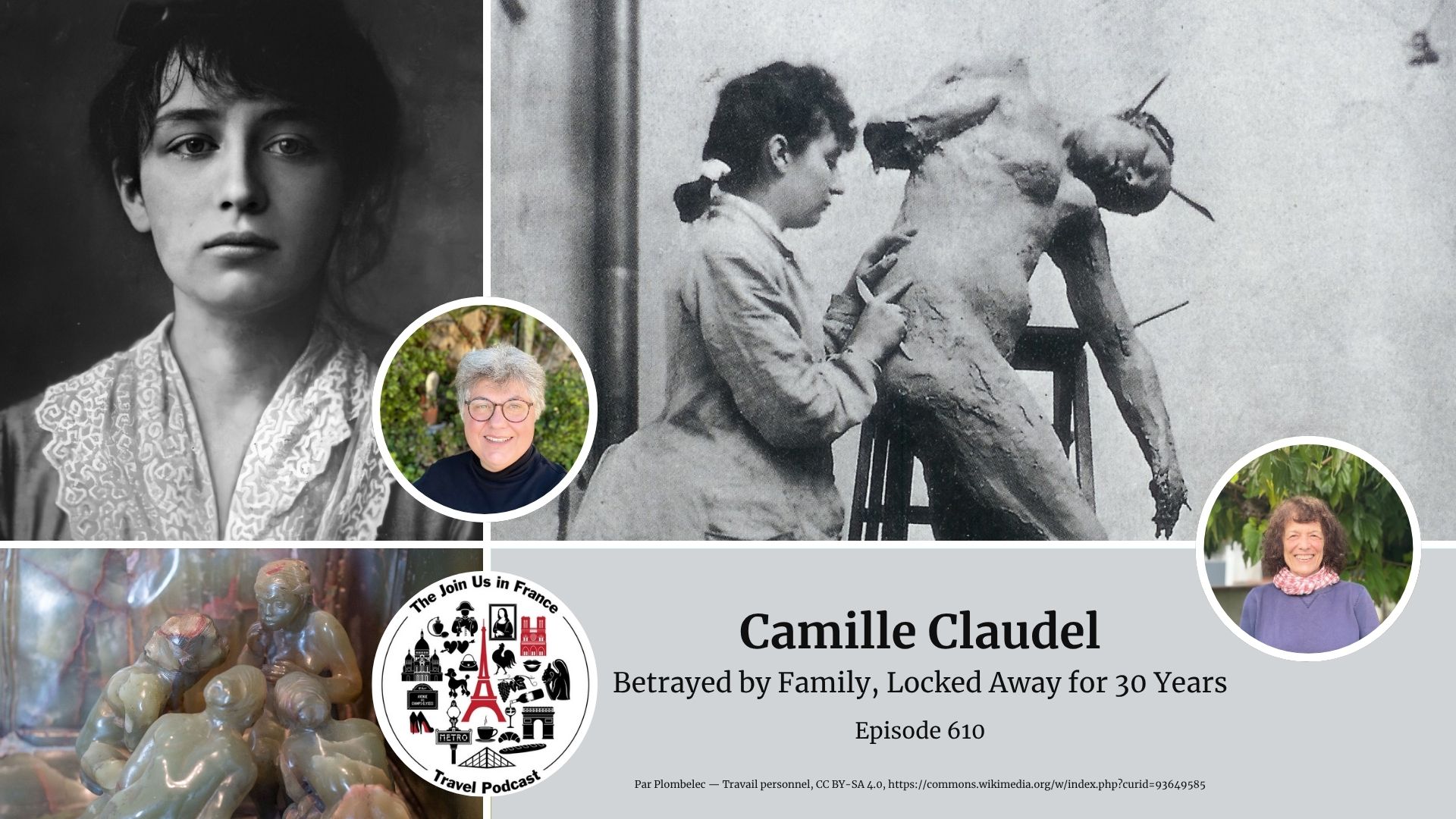
If you've spent any time in the Rodin Museum in Paris, you've probably stood in the room dedicated to Camille Claudel. Her sculptures also turn up in the Orsay, at the Augustins in Toulouse, and I saw a dozen or so pieces myself at the art museum in Rouen. For this episode, I talked with Elyse Rivin about who Camille Claudel actually was, because the story behind those sculptures is one of the harder ones we've covered on this podcast.
Listen to the episode ad-free
A Talented Kid With the Wrong Mother
Camille Claudel was born in 1864 into an upper-middle-class, conservative Catholic family. Her father was a haut fonctionnaire, a senior civil servant, which meant the family moved around depending on where the government sent him. She was the oldest of three: a sister, Louise, born two years after her, and a brother, Paul, two years after that. Paul Claudel went on to become a famous writer and diplomat, and he plays a central, and not flattering, role in the rest of this story.
Camille started modeling clay as a young girl and showed real talent early. Her father supported it and eventually arranged for the whole family to move to Paris so she could study at the Académie Colarossi, one of the few academies that accepted women. Her mother was against the whole thing from day one. She wanted her daughters raised to be wives and housekeepers, not artists, and she never came around on this, for the rest of her life.
Ten Years Alongside Rodin
At the academy, Camille Claudel worked under the sculptor Alfred Boucher, who eventually handed the workshop off to his friend, a rising sculptor named Auguste Rodin. Within a year, in 1882, when she was 18 and he was 42, they became lovers. That relationship lasted ten years. Rodin already had a longtime common-law wife at home and a habit of taking his assistants as mistresses, and by all accounts none of that stopped Camille Claudel from throwing herself into the relationship completely.
During that decade she worked on some of Rodin's best-known pieces, including The Kiss and The Gates of Hell, while also producing her own work on the side. Her style moved away from his and became more personal and emotional. It's also very likely she was pregnant more than once during this period, including at least one child she never raised, and at least two abortions. Rodin ended things when she was 28, after she kept pushing him to marry her and he refused.
Working Alone, Broke, and Unrecognized
After the breakup, Camille Claudel kept working from her own studio on the Île Saint-Louis. Rodin tried to help her get commissions, but as a woman sculptor in that era, she ran into a wall of plain misogyny. She had one steady patron, a countess who supported her for several years starting in 1897, then abruptly stopped in 1905 for reasons nobody has ever explained. Her family, especially her mother, refused to help her financially even as her money ran out.
Isolated and struggling, she became increasingly reclusive. Her brother visited her in 1909 and described her as dirty, paranoid, and talking to herself. In 1910, her studio flooded when the Seine overflowed its banks, and by 1912 she had destroyed most of the work still in her possession, convinced that Rodin and his circle were conspiring against her.
Committed by Her Own Family
Her father died in 1913. Her mother and brother didn't tell her, and she wasn't allowed at the funeral. Shortly after, the two of them had her committed to an asylum by force. She was diagnosed as psychotic and paranoid, though at least two psychiatrists who treated her over the years wrote that she was stable enough to be released. Her mother wouldn't allow it. She specifically restricted who could visit or write to Camille Claudel, cutting her off almost entirely from the outside world.
She was moved to an asylum in Montfavet, in the Vaucluse, in 1915, and stayed there until she died in 1943, three decades after she was first committed. Her mother never once visited her. Nearly the only person who did was her old friend from art school, Jessie Lipscomb, who came twice, in 1920 and 1929. Camille Claudel wrote letters every year of her confinement asking to be released and asking for materials to sculpt again.
She died of malnutrition. Psychiatric patients simply weren't fed properly during the food shortages of World War II, and more than 600 people died that way in the same asylum. Her family refused to claim her body, and she was buried in a common grave. When the graves were exhumed after the war, nobody could identify which remains were hers, so her final resting place is unknown.
A Great-Niece Brings Her Back
The one bright spot in this story came decades later. Reine-Marie Paris, Paul Claudel's granddaughter, learned about her great-aunt as a teenager and became an art historian largely because of her. In 1984, she published the catalogue raisonné, the definitive illustrated record of Camille Claudel's work, after years of tracking down pieces around the world. She also secured the rights to produce authorized bronze casts, fought her own family in court over it, and eventually opened the Musée Camille Claudel in Nogent-sur-Seine in 2017.
That catalogue also led to the 1989 film Camille Claudel, starring Isabelle Adjani, who has called it the most exhausting role of her career. It's largely accurate, and worth watching if you want the fuller emotional picture. Rodin, for what it's worth, wasn't entirely a villain in the end: in his will, he set aside a room in his own museum permanently for her work.
Listen to the Full Conversation
Elyse and I go into a lot more detail in the episode itself, including which of her sculptures to look for and where, so give it a listen if this history grabbed you the way it grabbed us.
Also on YouTube
If you enjoy this kind of French history and culture content, come check out Join Us in France Video on YouTube. I'm posting short videos there, some in English and some in French, and it's a nice complement to the podcast.
Don't Miss an Episode
Want the new episode in your inbox every week, along with the extra details that don't make it into the show notes? Sign up for my newsletter at joinusinfrance.com/newsletter.
Table of Contents for this Episode
More episodes about French culture
#JoinUsInFrance, #FrancePodcast, #Francophile, #FranceTravelTips, #RealFrance, #FranceTravelPodcast, #ExploreFrance, #FranceCulture, #ParisFrance, #CamilleClaudel, #AugusteRodin, #RodinMuseum, #FrenchSculpture, #WomenArtists, #ArtHistory, #ParisMuseums, #FrenchArtHistory, #ForgottenWomen, #FrenchHistory, #19thCenturyArt
FOLLOW US ON:
Subscribe to the Podcast
Apple YouTube Spotify RSSSupport the Show
Tip Your Guides Extras Patreon Audio Tours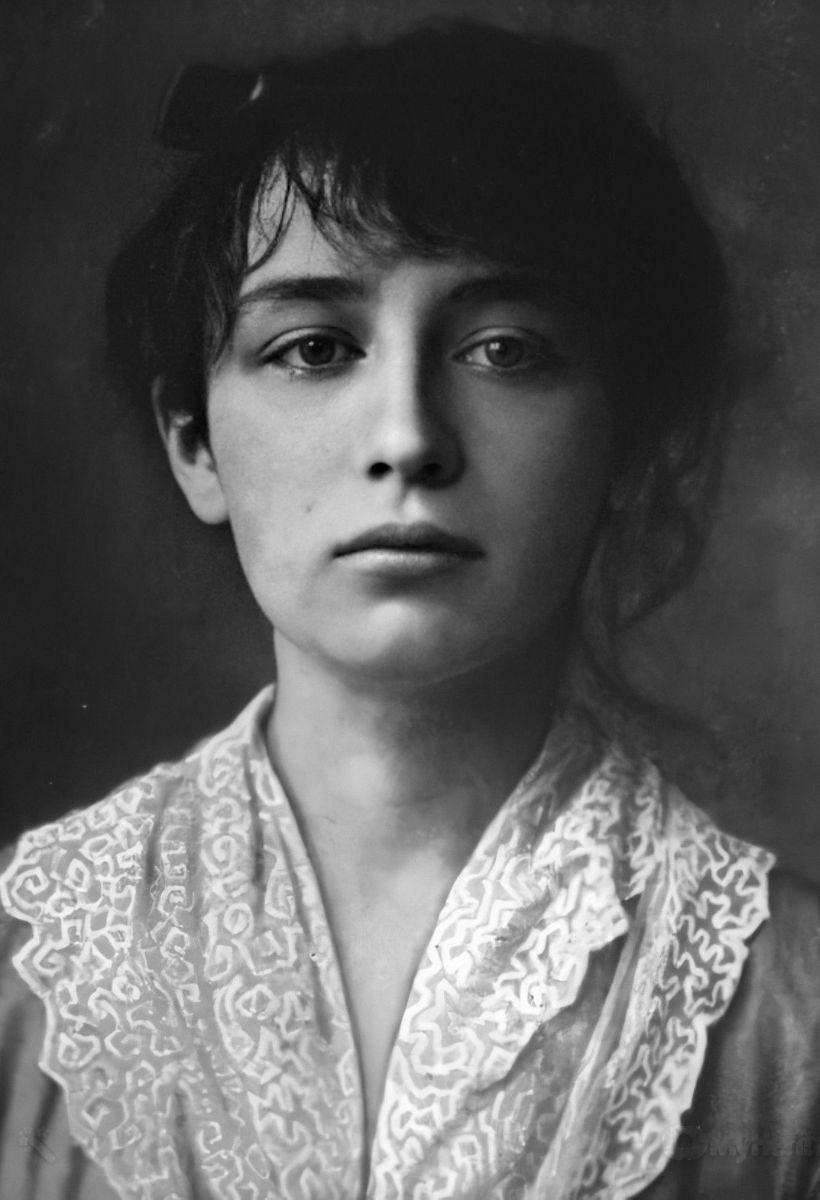
Read more about this episode
TranscriptCategories: French Culture, French History