
Categories: Basque Country, French Culture, French Customs & Lifestyle, Learn French
Exploring the Basque Country and Learning French After 50: A Journey of Culture and Language
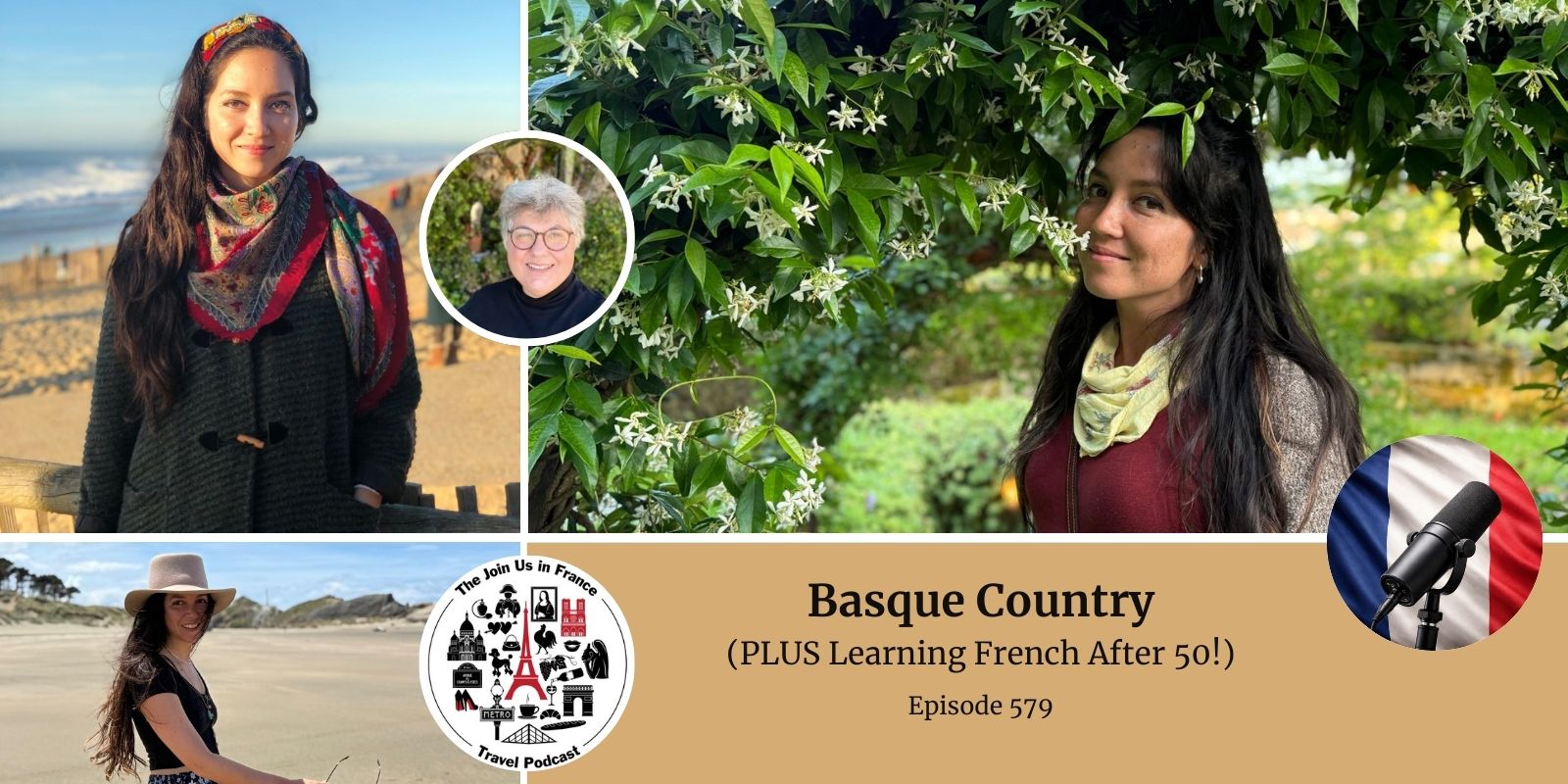
If there’s one thing I’ve learned from hosting Join Us in France for over 570 episodes, it’s that France never stops surprising me. Whether it’s the or the , every place has a story to tell. In Episode 579: Basque Country and Learning French After 50, I had the pleasure of chatting with Deborah Pham Van Xua, a proud Basque native and the founder of Feel Good French. Our conversation took us through the lush landscapes, vibrant traditions, and mouthwatering cuisine of the Basque Country, and then shifted to something equally close to my heart: learning French as an adult. If you’ve ever dreamed of exploring this unique region or picking up a new language later in life, this episode—and this blog post—are for you!
Listen to this episode ad-free
Why the Basque Country?
The Basque Country is one of those places that feels like it exists in its own little world. Straddling the border between France and Spain, it’s a region rich in history, culture, and natural beauty. Deborah, who was born in Bayonne, shared her deep connection to the area, and it’s easy to see why she’s so passionate about it.
A Land of Festivals and Flavors
One of the first things Deborah mentioned was the Fêtes de Bayonne, a massive street festival where , and the entire city becomes a celebration. It’s the kind of event that makes you feel like you’re part of something bigger—a tradition that brings people together, regardless of age or background. If you’re planning a visit, this is a must-see!
But the Basque Country isn’t just about festivals. It’s also about food. From the (a cured ham that rivals Spain’s best) to the , the flavors here are bold and unforgettable. Deborah recommended stopping by Saint-Jean-de-Luz for fresh seafood at the market or enjoying a meal in Biarritz, a chic seaside town with a laid-back vibe. And if you’re a fan of tapas, you’ll love the pintxos culture in nearby San Sebastián—though technically in Spain, it’s just a stone’s throw away and well worth the trip.
Architecture and Adventure
The Basque Country is also known for its . The traditional Basque houses, with their white walls and red or green shutters, are instantly recognizable. Deborah suggested visiting Espelette, a picturesque village famous for its peppers, and Ahetze, where a offers treasures for vintage lovers.
For those who love the outdoors, the region offers stunning beaches, like La Chambre d’Amour in Anglet, and hiking trails that wind through lush green hills. And if you’re a history buff like me, don’t miss the Basque Museum in Bayonne, where you can learn about the region’s language, traditions, and even its whaling history.
Learning French After 50: Yes, You Can!
Now, let’s talk about something that might resonate with many of you: learning French after 50. Deborah’s company, Feel Good French, specializes in teaching French to older learners, and she had some fantastic advice to share.
Another tutor who comes highly recommended by long-time fans of the podcast is Mikayla Sibne who also lives in France.
The Myth of “Too Late”
First, Deborah debunked the myth that it’s too late to learn a new language. “It’s never too late,” she said. “Your brain is still capable of learning—it just might take a different approach.” Instead of focusing on perfection, she encourages her students to and enjoy the process. After all, language learning is about connection, not grammar tests.
Practical Tips for Success
Deborah’s top tip? Shadowing. This technique involves listening to a French speaker and repeating what they say, mimicking their intonation and rhythm. It’s a simple but powerful way to improve your pronunciation and build confidence.
She also emphasized the importance of immersion. You don’t need to move to France to create an immersive environment—labeling objects in your home, watching French YouTube videos, or even recording yourself speaking can make a big difference. And if you’re planning a trip to France, Deborah suggested focusing on practical phrases that will help you navigate everyday situations, like ordering food or asking for directions.
One of my favorite pieces of advice from Deborah was to set realistic goals. If your dream is to chat with locals at a café, aim for a —enough to have meaningful conversations without stressing over perfection. And remember, the Basque Country is a great place to practice! Unlike Paris, where many people switch to English, the Basque region offers plenty of opportunities to use your French in real-life situations.
The Magic of the Basque Country
What I love most about the Basque Country is its . The Basque people are fiercely proud of their culture, and it shows in everything from their language (which is unlike any other in the world) to their traditional sports, like pelote Basque. Deborah grew up playing this fast-paced game, and she described it as a , played against a wall called a fronton. It’s a sport deeply rooted in the region’s history, and watching a match is a great way to experience local culture.
Another highlight of our conversation was the Vélodyssée, a cycling route that starts in the Basque Country and stretches all the way up the Atlantic coast. Whether you’re an avid cyclist or just looking for a scenic way to explore, this is a fantastic option. And if you prefer to explore on foot, the coastal paths between Biarritz and Saint-Jean-de-Luz offer breathtaking views of the ocean.
Paris’s Cycling Boom: A Bonus Surprise!
After my chat with Deborah, I shared a little something extra in the magazine segment of the episode: . The city has undergone a incredible transformation in recent years, with more bike lanes, cargo bikes, and even ! It’s a testament to how cities can change when they prioritize sustainability and quality of life.
Final Thoughts: Why This Episode Matters
This episode is a reminder that . The Basque Country is a place where you can immerse yourself in history, culture, and nature, all while practicing your French. And if you’ve ever felt hesitant about learning a new language later in life, Deborah’s story is proof that it’s not only possible but deeply rewarding.
So, whether you’re planning a trip to the Basque Country or just dreaming of improving your French, I hope this episode—and this blog post—inspire you to take the leap. And if you do visit, be sure to try the pintxos, explore the flea markets, and maybe even catch a game of pelote Basque. Who knows? You might just fall in love with the region as much as Deborah and I have.
Table of Contents for this Episode
Table of Contents for this Episode
More episodes about the Basque Country and Learning French
#JoinUsInFrance, #FrancePodcast, #TravelFrance, #FrenchCulture, #ExploreFrance, #DiscoverFrance, #FranceTravelTips, #RealFrance, #Francophile, #FranceAdventures, #BasqueCountry, #LearnFrenchAfter50, #BayonneBiarritz, #SaintJeanDeLuz, #BasqueFood, #BasqueTraditions, #PeloteBasque, #FrenchLanguageLearning, #TravelAfter50, #SlowTravelFrance, #HiddenFrance
FOLLOW US ON:
Subscribe to the Podcast
Apple YouTube Spotify RSSSupport the Show
Tip Your Guides Extras Patreon Audio Tours
Read more about this episode
TranscriptCategories: Basque Country, French Culture, French Customs & Lifestyle, Learn French