
Categories: Alsace and Lorraine, French Culture, Off the Beaten Track in France
This episode features our frequent and very popular guest Elyse Rivin. If you enjoy her episodes, please consider supporting her on Patreon.
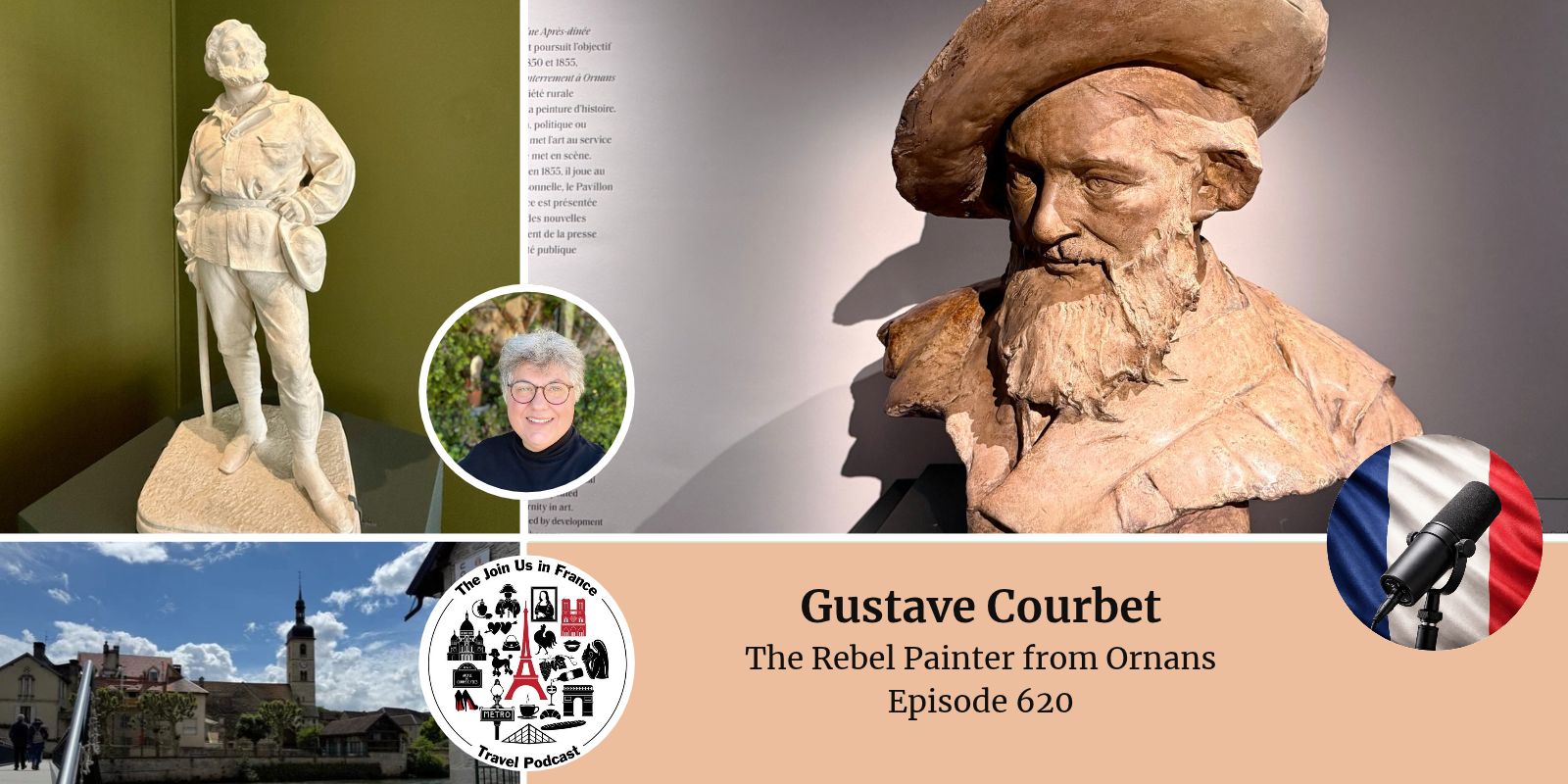
If you’ve ever walked through the Orsay Museum and stopped in front of a painting thinking, “Whoa, is that really what I think it is?”, there’s a good chance it was a Courbet. In episode 620 of Join Us in France, art historian Elyse Rivin and I talk about Gustave Courbet, the painter from Ornans in the Doubs who refused to play by the rules of the French art establishment. We also cover what you can see in and around Ornans today.
Why I Stopped in Ornans
I stopped in Ornans because Elyse told me to. I was driving home from a trip to Metz, and she said, “You’re going through that area, you have to stop at the Courbet Museum.” I gave it a couple of hours. It deserved an overnight stay.
The drive from Besançon to Ornans is on small D roads, and the landscapes are lovely. Rolling hills, little groups of cows lying under trees, completely content with their lives. This is a quiet, very un-touristy part of France.
Art by the Rules
To understand why Courbet mattered, you need to know the system he was born into. Starting with Louis XIV, France ran art the way it ran everything else: with rules. The Academy ranked subjects from most to least prestigious. Historical scenes, coronations and battles came first, then portraits, with still lifes and watercolors at the bottom.
If you wanted to sell your work, you had to get it accepted into the Salons, which were judged by the Academy. Paintings hung floor to ceiling, like a hypermarket of art. If you weren’t in the Salon, nobody saw your work, and nobody bought it.
A Self-Taught Rebel
Gustave Courbet was born in 1819 into a well-off landowning family. He was the only son among four children, and his parents spoiled him. He was a poor student but a gifted artist. At 14, he skipped his classes in Besançon and sat in on classes at the local art school instead.
His parents sent him to Paris to study law. He stopped going to class within a year. With a stipend from his family, he spent his time at the Louvre, copying Dutch, Spanish and Italian painters such as Rubens, Velázquez and Zurbarán, not the French. He never took formal painting lessons.
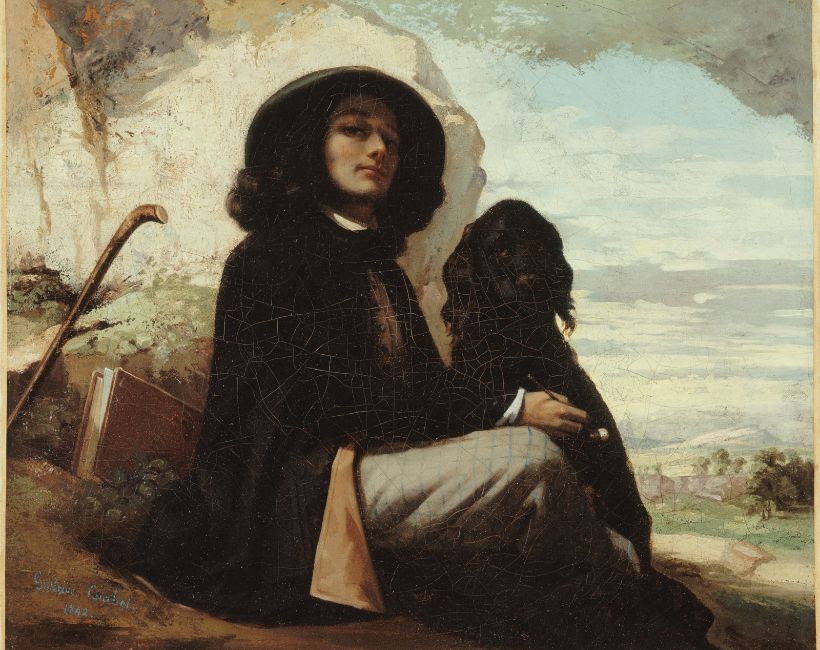
He submitted work to the Salon every year from 1840 and kept getting rejected. In 1844, the Salon finally accepted Self-Portrait with Black Dog. Courbet was pleased but annoyed, because it wasn’t the painting he thought was most interesting.
Ordinary People on a Grand Scale
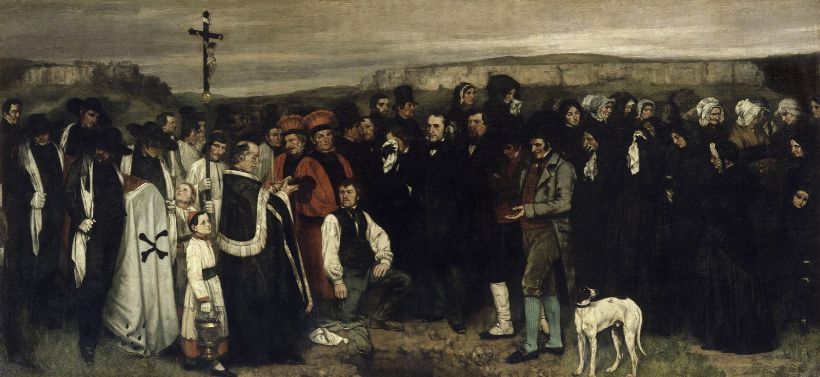
What Courbet called realism wasn’t about painting faces accurately. It was about who he painted: peasants, workers and villagers, shown with pride, not pity. A Burial at Ornans is more than six meters wide and shows nothing but ordinary villagers at a funeral. That size was reserved for kings and battles, so the painting caused a scandal.
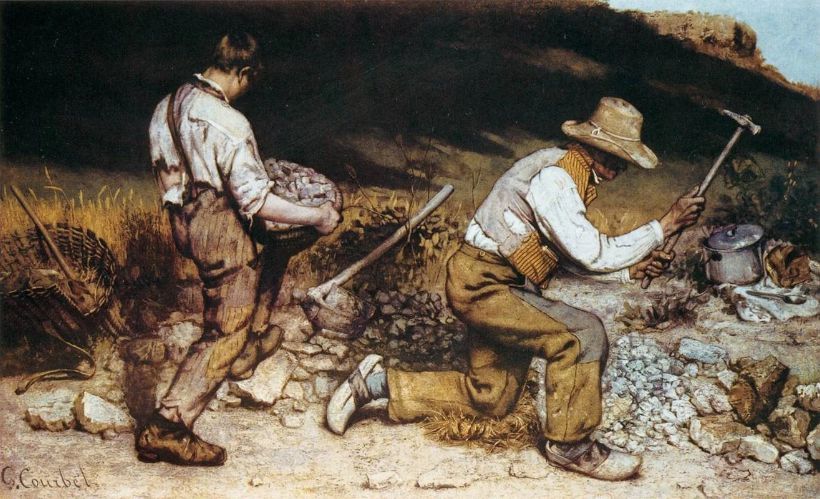
The Stone Breakers shows men doing hard, physical work. Even Delacroix, who admired his talent, wished he wouldn’t paint “ugly people.”
Courbet also used photography as a working tool, which was unusual for his time. And he experimented constantly: palette knives, cloth, light paint layered over dark.
Politics, Exile and Legacy
Courbet became increasingly political. He was influenced by the philosopher Proudhon, and he turned down the Legion of Honor because he despised Napoleon III. He joined the Paris Commune and became the public face of the group calling for the Vendôme Column to come down. After the Commune fell, a court held him personally responsible and ordered him to pay for rebuilding it. He went into exile in Switzerland, where he died in 1877. His sister Juliette brought his remains back to Ornans in 1919.
Monet, Manet and the Impressionists all said they owed him a debt, not only for his technique but for his idea that artists must be free.
The Origin of the World
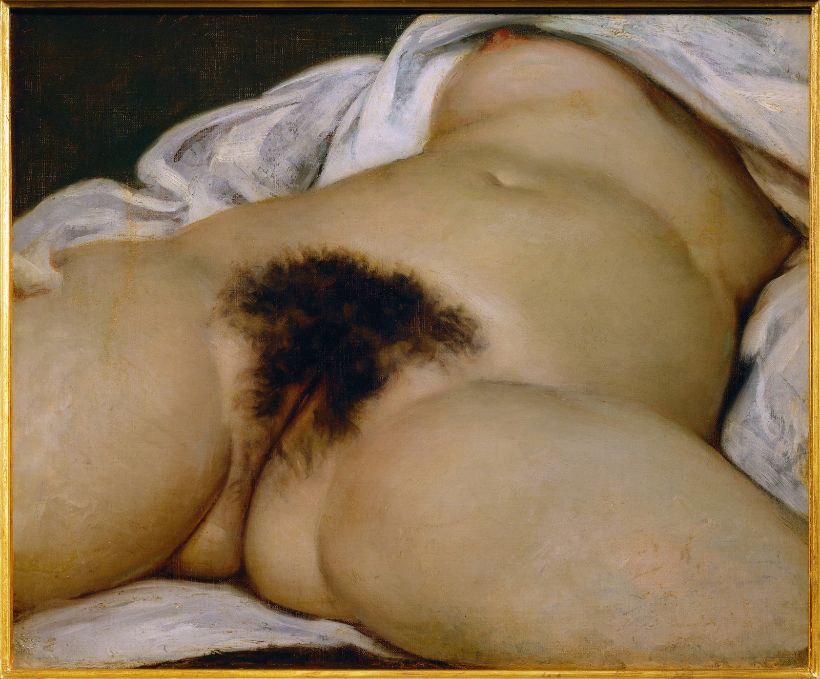
You can’t talk about Courbet without mentioning The Origin of the World, a small, very explicit painting made as a private commission. It hangs at the Orsay, and there’s a copy in Ornans, displayed in a box with a sliding cover. I stood in that small room for a while just to watch people’s reactions. Everyone has a quick “Oh!” moment, then tries hard to look calm.
Visiting Ornans and the Loue Valley
- Musée Courbet: Plan two to three hours. It sits right on the river, with views of the colorful houses along the water.
- Courbet’s studio: Close to the museum. Allow 30 to 45 minutes.
- Ferme Familiale Courbet in Flagey: The family farm, free to visit. You’ll find gardens, exhibitions, artists in residence and a café named after his sister Juliette.
- The Loue Valley: Courbet painted it over and over. Look on the map for places marked belvédère, which means viewpoint, such as the Belvédère du Grand Méandre de la Loue. The Decathlon Outdoor app lists hikes and bike rides at every level.
- La Source de la Loue: A short hike to the river’s rocky source. It’s like Fontaine de Vaucluse without the crowds or the souvenir shops.
- Besançon: About half an hour away. Its fortifications are a UNESCO World Heritage site.
- Via Francigena: The pilgrimage route from Canterbury to Rome runs right through Ornans.
If you love art and nature and you’re tired of crowds, this part of France is for you.
Also in This Episode
Bootcamp 2026 just ended. At the end of the episode, I share how the week went and what’s next for Join Us in France events.
Listen to the full episode to hear Elyse tell Gustave Courbet’s story in her own words.
Want more France in your inbox? My newsletter comes out around each episode. It’s where I share what’s going on behind the scenes, not just the show notes. Sign up at joinusinfrance.com/newsletter.
FOLLOW US ON:
Subscribe to the Podcast
Apple YouTube Spotify RSSSupport the Show
Tip Your Guides Extras Patreon Audio ToursRead more about this episode
TranscriptCategories: Alsace and Lorraine, French Culture, Off the Beaten Track in France