

Categories: French Culture, French History
This episode features our frequent and very popular guest Elyse Rivin. If you enjoy her episodes, please consider supporting her on Patreon.
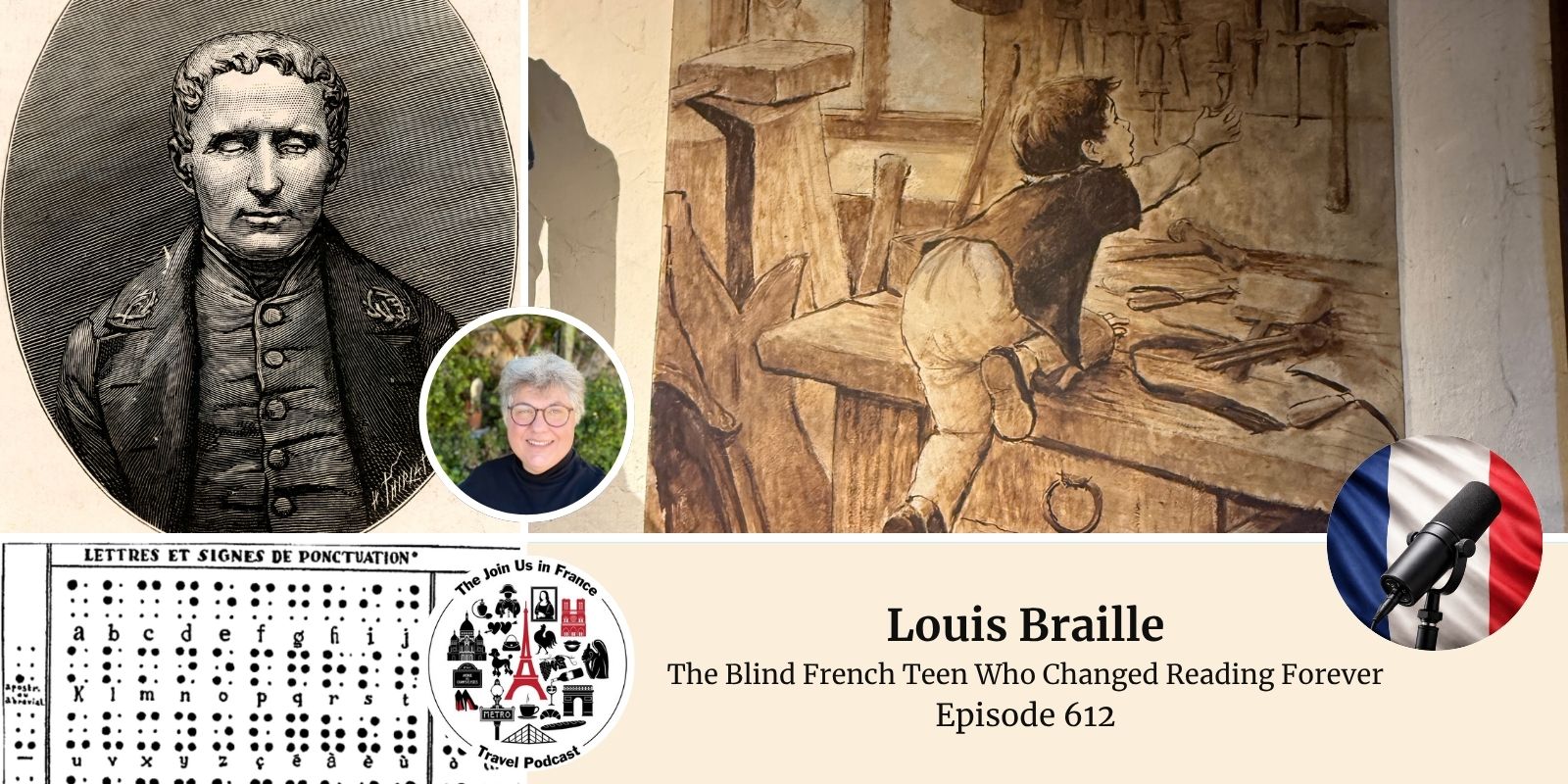
This week on the podcast, I sat down with Elyse Rivin of Toulouse Guided Walks to talk about Louis Braille — the French teenager who lost his sight at age five and, before he turned 20, invented a reading system used by blind people all over the world today. I've wanted to tell this story for a long time. I grew up near a guide dog school for the blind, and my husband's grandmother, Ruth H. Craig, wrote one of the standard teaching manuals for Braille mathematics. It's a story that's been close to me for a while.
Listen to the episode ad-free
A Quick Note Before We Start
I recently pulled every ad off the Join Us in France website. The podcast audio itself still carries ads — a girl has bills to pay — but the blog and the site are now ad-free. Please note that you can turn off audio ads by joining Patreon at my lowest level, which is a good deal for both you and me!
A Childhood Accident That Changed Everything
Louis Braille was born in 1809 in Coupvray, a village east of Paris, to a family of saddle and harness makers. At age three, he snuck into his father's workshop and tried to imitate what he'd seen his father do with an awl. It slipped, and he lost his left eye. Infection spread to the other eye, as it often did in an era with no antibiotics, and by age five he was completely blind. Today, France has around 1.7 to 1.8 million people with significant visual impairment, and only a small fraction have been blind since childhood, like he was. That group benefits most from what he went on to build.
Learning to Read at the Royal School for the Blind
At ten, Louis was sponsored to attend the Royal Academy for the Blind in Paris, founded in 1784 by Valentin Haüy. The school taught reading through embossed letters — oversized raised print on heavy, waxy paper that was rare and expensive. Conditions at the boarding school were rough, and tuberculosis, which eventually killed him, spread easily through the cold, drafty dormitories. He excelled anyway, especially in music, becoming a skilled pianist, organist, and cellist, and later working as a church organist in Paris.
The Idea That Started It All
The breakthrough came from an unexpected visitor: a military officer named Charles Barbier, who had invented "night writing," a code of raised dots that let soldiers pass messages in the dark. Barbier's version was clunky and built for sounds rather than letters. Louis simplified it into a six-dot cell, two across and three down, with each cell standing for a specific letter. That one idea produces 63 characters, enough for a full alphabet, punctuation, numbers, and eventually music notation and higher mathematics. Children who learn it young read and write it as fast as sighted people read print.
Resistance, Then a Wildfire
His fellow students loved the new system immediately. The school's director did not — most of the teachers were sighted and had no interest in learning something new when embossed letters worked fine for them. What changed their minds was competition: the system was spreading to schools in other countries faster than the school where it was invented could officially adopt it. Once it was, it caught on fast, precisely because it was so much easier to learn than anything before it. The public proof came at the opening of the school's new building, when two sisters, one sighted and one blind, demonstrated it live: the sighted sister read aloud a random theater ticket pulled from the audience, and her blind sister transcribed it and read it back perfectly. The crowd was stunned.
Buried in the Panthéon
Louis Braille died of tuberculosis in 1852, at 43. Not a single newspaper marked his death — he was, to the press of his era, just a blind man. It took the centennial of his death, in 1952, for the French president to have his remains moved to the Panthéon. Elyse found footage of the procession on YouTube, with thousands of blind people from schools across France in attendance. Worth watching if this story moves you the way it moved us.
Does It Still Matter Today?
We also talked about whether Braille still matters now that phones can read text aloud. My answer is yes. I've watched blind friends read printed Braille books at speeds that look like witchcraft, turning pages every few seconds. It isn't a backup for literacy. For people who can't use their eyes, it is literacy.
There's more in the full episode: how the system adapted across languages, why some adults who lose their sight later in life skip learning it, and — since I couldn't resist — guide dog etiquette and an update on Igor, our retired guide dog. Listen to episode 612 wherever you get your podcasts.
Stay in the Loop
For the inside scoop on new episodes, upcoming trips, and everything else I'm working on, sign up at joinusinfrance.com/newsletter.
Table of Contents for this Episode
More episodes about French history
#JoinUsInFrance, #FrancePodcast, #Francophile, #FranceTravelTips, #RealFrance, #BonjourFrance, #ExploreFrance, #FrenchCulture, #FrenchHistory, #TravelFrance, #LouisBraille, #BrailleHistory, #BlindHistory, #DisabilityInclusion, #GuideDogs, #Coupvray, #AccessibilityMatters, #InclusionMatters, #FamousFrenchPeople, #SouthwestFrance
FOLLOW US ON:
Subscribe to the Podcast
Apple YouTube Spotify RSSSupport the Show
Tip Your Guides Extras Patreon Audio Tours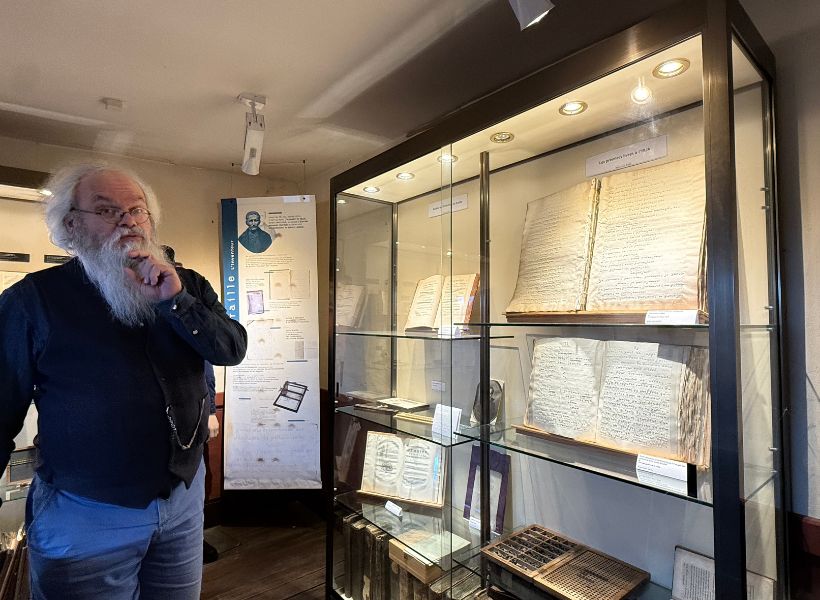
Read more about this episode
TranscriptCategories: French Culture, French History