

Categories: French Departments, Off the Beaten Track in France
This episode features our frequent and very popular guest Elyse Rivin. If you enjoy her episodes, please consider supporting her on Patreon.
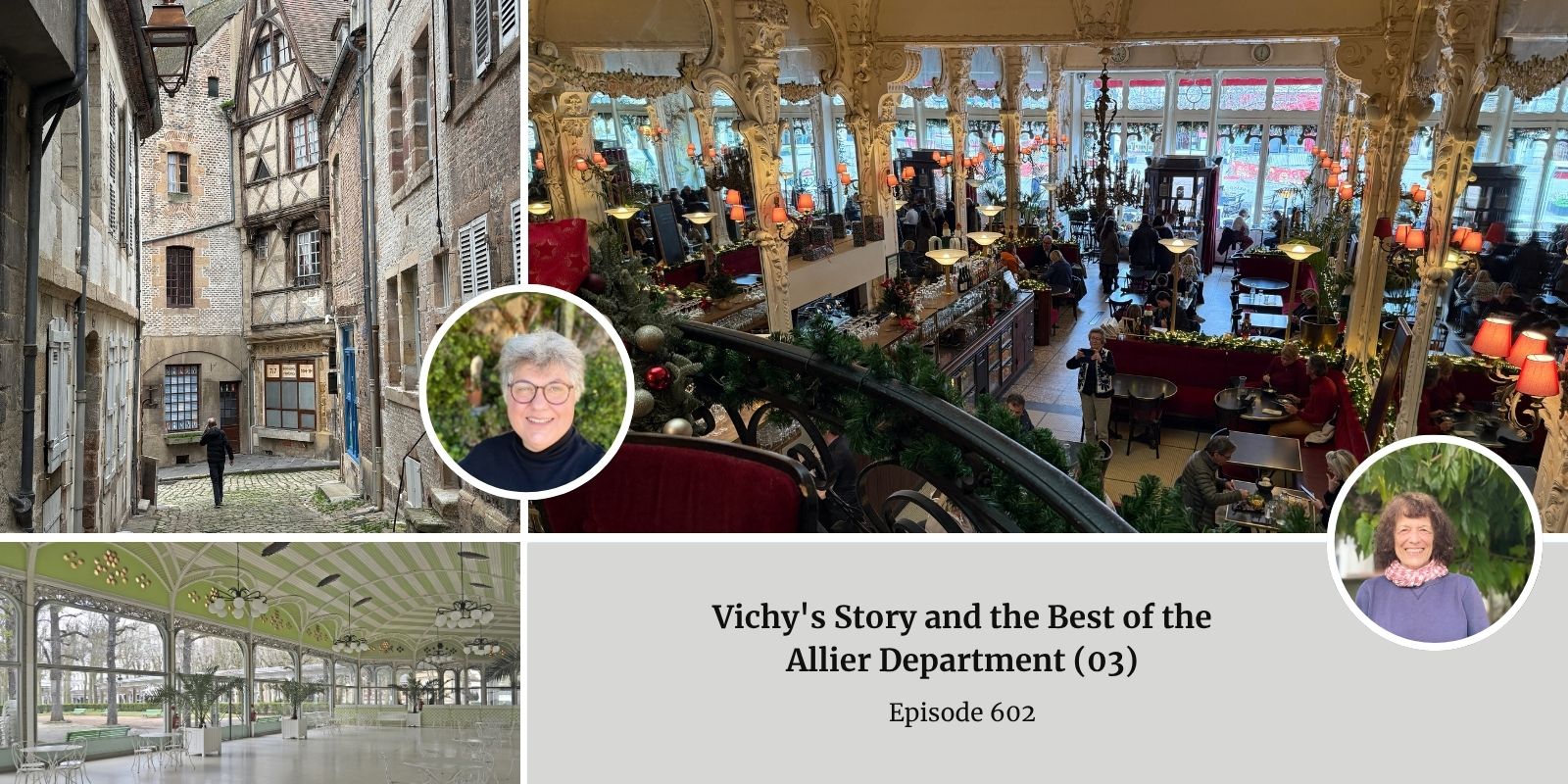
I recently spent a few days in the Allier department, the part of France sitting dead center of the country, and one of the least visited by anyone other than the French themselves. With around 335,000 people spread across small towns rather than concentrated in cities, it's the kind of place where you can drive for an hour and barely see another visitor. I went specifically because I wanted to see Vichy, a name that gets mentioned constantly, and I wanted to understand the Vichy France history behind it, not just the part everyone already knows.
Listen to the episode ad-free
Vichy Was Too Quiet, Moulins Was the Highlight
I arrived in Vichy on a freezing night in early December, and the town was completely dead. At a pizza place the next day, the owner told me straight: in summer, people come for the baths, the treatments, and the opera, but if I wanted things lively in December, I needed to go to Moulins, the actual prefecture of the department.
He was right. Moulins, with about 20,000 people, turned out to be the highlight of the trip.
What to See in Moulins
It's home to the National Center for Stage Costume, which had an impressive collection even though costumes aren't normally my thing. I also visited the Maison Mantin, the former home of a wealthy tax collector that was left untouched for 100 years under the terms of his will, then opened as a museum. It's a strange, beautiful time capsule - dark wood, lush fabrics, no kitchen because the cooking happened in a separate part of the house. No photos allowed, unfortunately. For lunch, I stopped at the Café du Centre, a gorgeous Art Deco spot full of locals speaking French, with decent food (you don't go there for the food).
Medieval Villages and the Allier Countryside
Between Vichy and Moulins, there are several medieval villages worth a stop if you're driving through, even though most were completely empty in December: Charroux, a plus beau village de France, and Billy, with its medieval chateau. Further out, the Allier has the Forêt de Tronçais, the Sioule valley (good for kayaking and scenic drives), the Saint-Pourçain wine region, and small towns like Bourbon-l'Archambault (with its own thermal baths), Souvigny, La Palice, and Hérisson. It was cold enough that my EV refused to preheat the next morning because the battery had a low state of charge - if you're traveling here in winter, find a place with a plug where you sleep!
The Real Vichy France History
Now, about Vichy itself. If you ask most people what comes to mind when they hear the name, it's World War II and the collaborationist government that operated there for four years. But that's four years out of a town that's nearly 2,000 years old, and the Vichy France history goes back much further than that.
The Romans found thermal springs along the Allier river and built an entire bathing and industrial center there, originally called Aquae Calidae - literally "warm waters." The area also produced sigillée pottery, a reddish-brown glazed ware that became one of the major exports of Roman Gaul. After a quiet medieval period, Vichy's spa reputation came back in the 1600s, largely thanks to the Marquise de Sévigné, who came for a cure for her rheumatism, wrote about it in her famous letters, and had a house built there. Two of Louis XV's daughters followed, demanding their own chateau away from "the hoi polloi," and from then on, the aristocracy followed. By the 19th century, under Napoleon and Napoleon III, Vichy had a rail line to Paris, one of the first modern telephone systems in France, and close to 50,000 residents at its peak - including colonists returning from across the French empire for treatment.
How Four Years Defined the Town's Reputation
That stretch of Vichy France history is the part most people already know, but it's worth remembering it's only four years out of nearly two thousand. Vichy was chosen as the seat of the Pétain government in 1940 precisely because of everything built up over the previous centuries: the roads, the rail line, and the communications infrastructure that much of unoccupied France still lacked. The government lasted until 1944, when a Swiss diplomat negotiated a peaceful handover to the Resistance, sparing the town from destruction. Today, locals call themselves Vichyssois (or Vichyssoise) - specifically to avoid being called Vichyste.
Vichy Today
Vichy today still makes its money from the thermal waters, bottled as Vichy Célestins and Saint-Yorre, and from the Vichy pastilles, which are actually made with the thermal water itself. L'Oréal also has a research headquarters there.
If you're looking for a part of France that's quiet, central, not too far from a fast train to Paris, and largely undiscovered, the Allier is worth considering - perhaps not in December?
For more episode recaps and what I'm paying attention to in France each week, sign up for my free newsletter at joinusinfrance.com/newsletter.
Table of Contents for this Episode
More episodes about specific French departments
#JoinUsInFrance, #FrancePodcast, #Francophile, #FranceTravelTips, #RealFrance, #VisitFrance, #ExploreFrance, #TravelFrance, #FranceRoadTrip, #HiddenFrance, #OffTheBeatenPath, #SecretFrance, #FranceHistory, #Vichy, #Allier, #Moulins, #Auvergne, #MassifCentral, #Bourbonnais, #ThermalSpa
FOLLOW US ON:
Subscribe to the Podcast
Apple YouTube Spotify RSSSupport the Show
Tip Your Guides Extras Patreon Audio Tours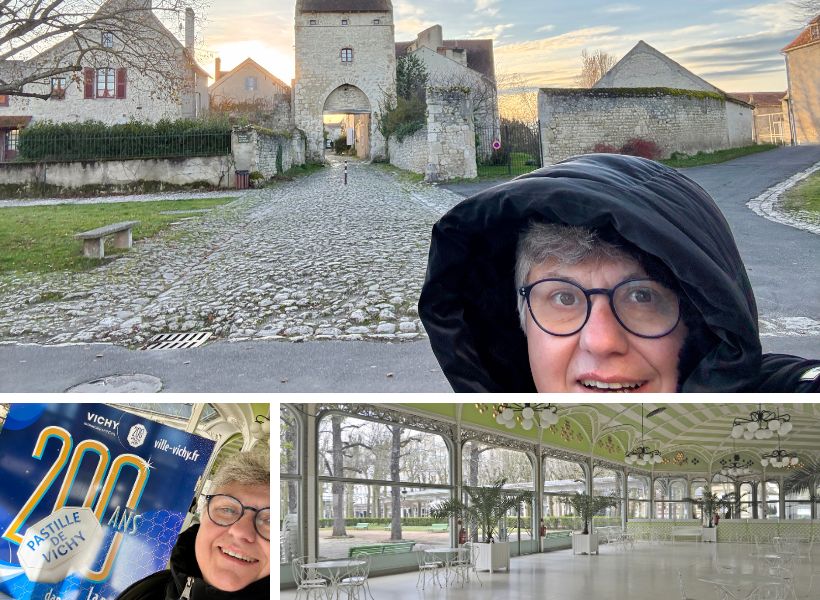
Read more about this episode
TranscriptCategories: French Departments, Off the Beaten Track in France