


Category: French History
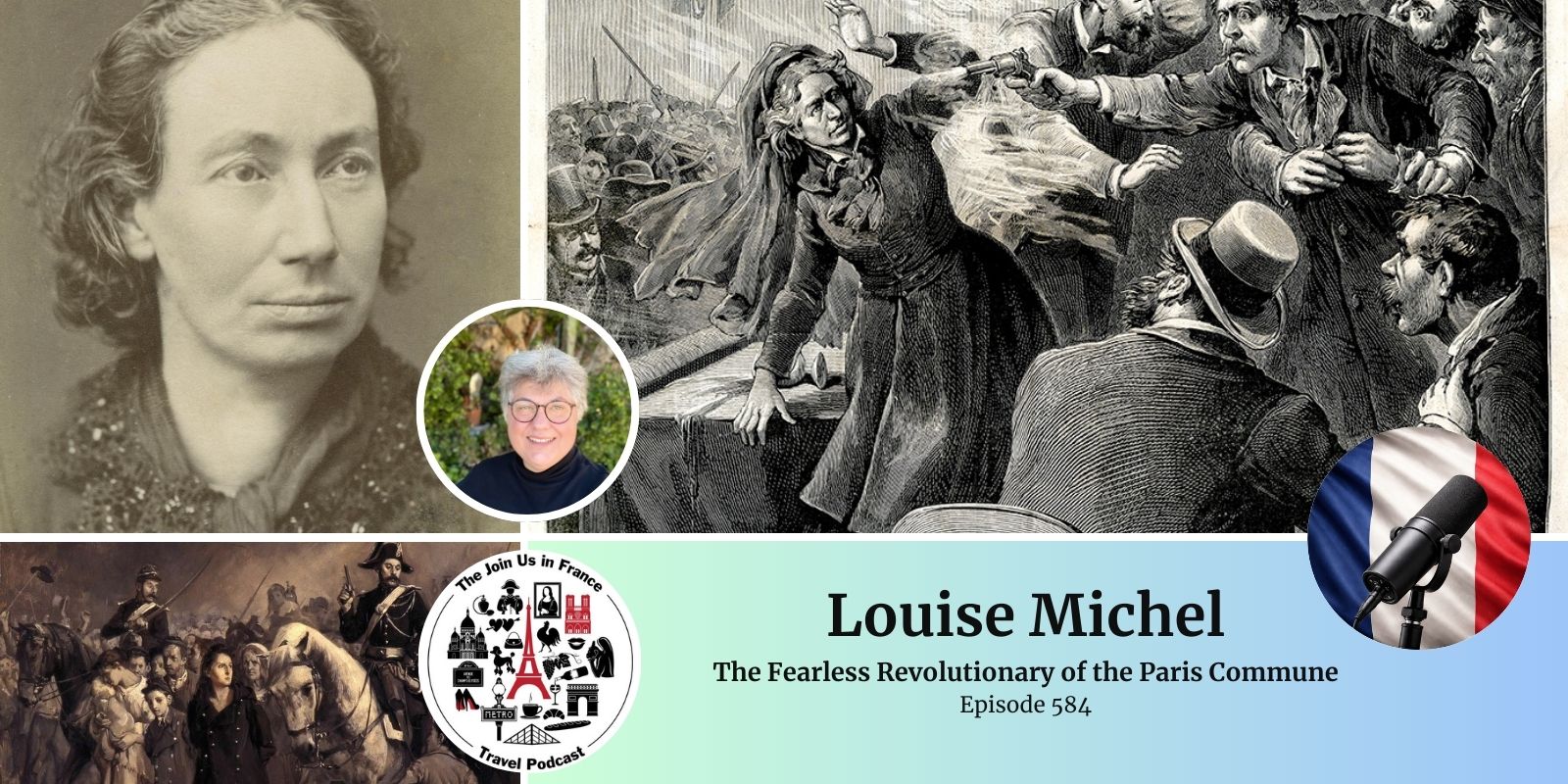
Paris, 1871. The city is starving. The government has collapsed. And a radical uprising is about to change history forever. In this episode of Join Us in France, host Annie Sargent and Elyse Rivin of Toulouse Guided Walks dive deep into the dramatic story of the Paris Commune and the extraordinary life of Louise Michel. If you’ve ever wondered about the fiery women who shaped France’s turbulent past, this is the episode for you.
Listen to this episode ad-free
Who Was Louise Michel?
Elyse Rivin, a historian and guide based in Toulouse, joins Annie to unpack the life of this fearless woman. From her early years in a château to her militant activism in Paris, Louise Michel’s journey is nothing short of extraordinary. She believed in women’s rights, workers’ cooperatives, and even the abolition of night work for bakers—because, as Annie points out, “people want their bread in the morning!”
The Paris Commune: A Revolution Within a Revolution
The Paris Commune was a radical socialist government that briefly ruled Paris from March 18 to May 28, 1871. It emerged after France’s humiliating defeat in the Franco-Prussian War and the collapse of Napoleon III’s Second Empire. The Commune tried to establish a more democratic and egalitarian society, but it was brutally crushed by the French army in what became known as the Bloody Week.
During this time, Louise Michel was on the front lines. She carried a rifle, organized ambulance stations, and even led a battalion in Montmartre. Elyse explains that Louise was not just a symbol but an active participant in the revolution. “She was in the 61st Battalion of Montmartre,” Elyse says. “She was out in the front line.”
The Commune’s legacy is still divisive today. Some see it as a heroic stand against oppression, while others view it as a destructive rebellion. But one thing is clear: it inspired socialists, anarchists, and feminists worldwide. And Louise Michel was at the heart of it all.
Louise Michel Biography: From Schoolteacher to Revolutionary Icon
Louise Michel’s life is a whirlwind of activism, exile, and relentless fighting for justice. After the fall of the Commune, she was arrested and sentenced to deportation in New Caledonia. There, she didn’t just survive—she thrived. She learned the local Kanak language, taught Kanak girls, and even participated in a revolt against French colonial rule.
Elyse shares a fascinating detail: Louise Michel was shot in the head during a speech in Paris in 1888. The bullet remained lodged in her skull for the rest of her life, yet she continued her activism without missing a beat. “She was shot twice,” Elyse reveals. “The second shot went into her head, and it did not stop her.”
Upon her return to France, Louise became a feminist icon. She traveled across Europe, speaking about anarchism and women’s rights. She met Sylvia Pankhurst, a famous suffragette, and continued to inspire movements until her death in 1905. Her funeral drew thousands, proving her lasting impact.
The Myth of the Pétroleuses and the Destruction of Paris
One of the most enduring myths of the Paris Commune is the story of the Pétroleuses—women accused of setting fire to Paris with oil. Historians now believe this was largely propaganda to discredit female revolutionaries. Louise Michel was often linked to these accusations, though she denied any involvement in arson.
The Commune did leave its mark on Paris. The Tuileries Palace was burned down, the Hôtel de Ville was destroyed and later rebuilt, and the Vendôme Column was toppled as a symbol of imperial militarism. Elyse notes that traces of the Commune can still be found across Paris, from plaques in the 13th arrondissement to the Mur des Fédérés in Père Lachaise Cemetery, where Communards were executed.
What Happens After the Revolution?
After the Commune’s fall, Louise Michel’s legacy lived on. She is remembered in Paris through a metro station, a square near Sacré-Cœur, and a stamp issued in her honor. But her influence extends far beyond France. She inspired feminist and anarchist movements worldwide, proving that one woman’s courage could spark global change.
In the magazine segment of the podcast, Annie discusses the legacy of the Paris 2024 Olympics. Just as the Commune reshaped Paris, the Olympics have transformed Saint-Denis. The former Olympic Village is now a thriving neighborhood, with residents moving into apartments once occupied by athletes. Annie notes that the area is still evolving, with shops and services opening in the coming months. It’s a reminder that history—whether revolutionary or sporting—leaves a lasting mark on a city.
Why This Episode Matters
Louise Michel: The Fearless Revolutionary of the Paris Commune is more than a history lesson. It’s a story of resilience, defiance, and the power of conviction. Elyse Rivin’s deep knowledge and Annie Sargent’s engaging storytelling bring this tumultuous period to life. Whether you’re a history buff, a feminist, or simply curious about France’s past, this episode will captivate you.
Listen and Subscribe
Ready to dive into the story of Louise Michel? Listen to the full episode on your favorite podcast app or on Spotify or YouTube using the links below. Don’t forget to subscribe to Join Us in France for more fascinating stories about France’s history, culture, and hidden gems.
Table of Contents for this Episode
Table of Contents for this Episode
More episodes about French history
#JoinUsInFrance, #FrancePodcast, #TravelFrance, #FrenchCulture, #ExploreFrance, #DiscoverFrance, #FranceTravelTips, #RealFrance, #Francophile, #FranceAdventures, #LouiseMichel, #ParisCommune, #FrenchHistory, #RevolutionaryWomen, #19thCenturyFrance, #AnarchistHistory, #FeministIcons, #HiddenFrance, #FrenchRevolution, #TravelThroughHistory
FOLLOW US ON:
Subscribe to the Podcast
Apple YouTube Spotify RSSSupport the Show
Tip Your Guides Extras Patreon Audio Tours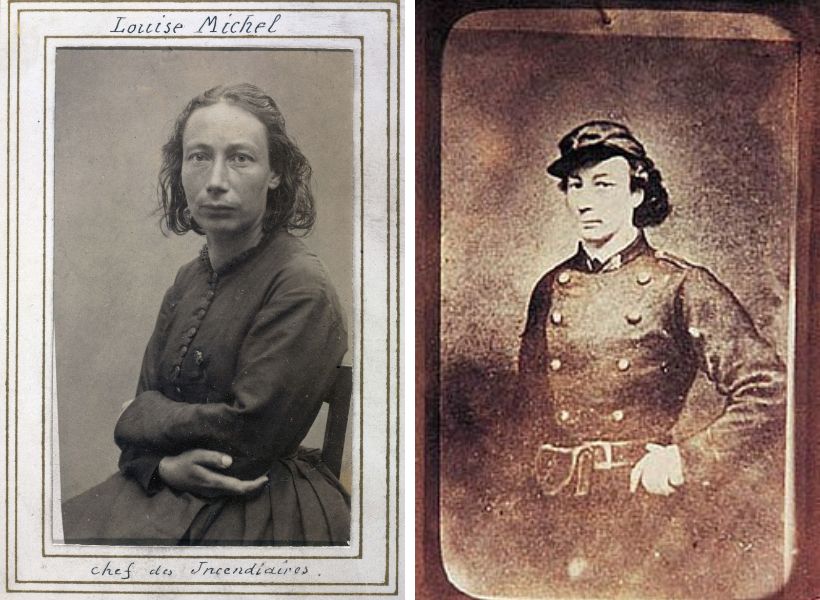
Read more about this episode
TranscriptCategory: French History